- August 31, 2026
APSCC Contributes to UNDP Climate Action Academy on Biodiversity and Protected Areas in Bosnia and Herzegovina
International Expertise from APSCC Supports Climate and Biodiversity Policy Dialogue
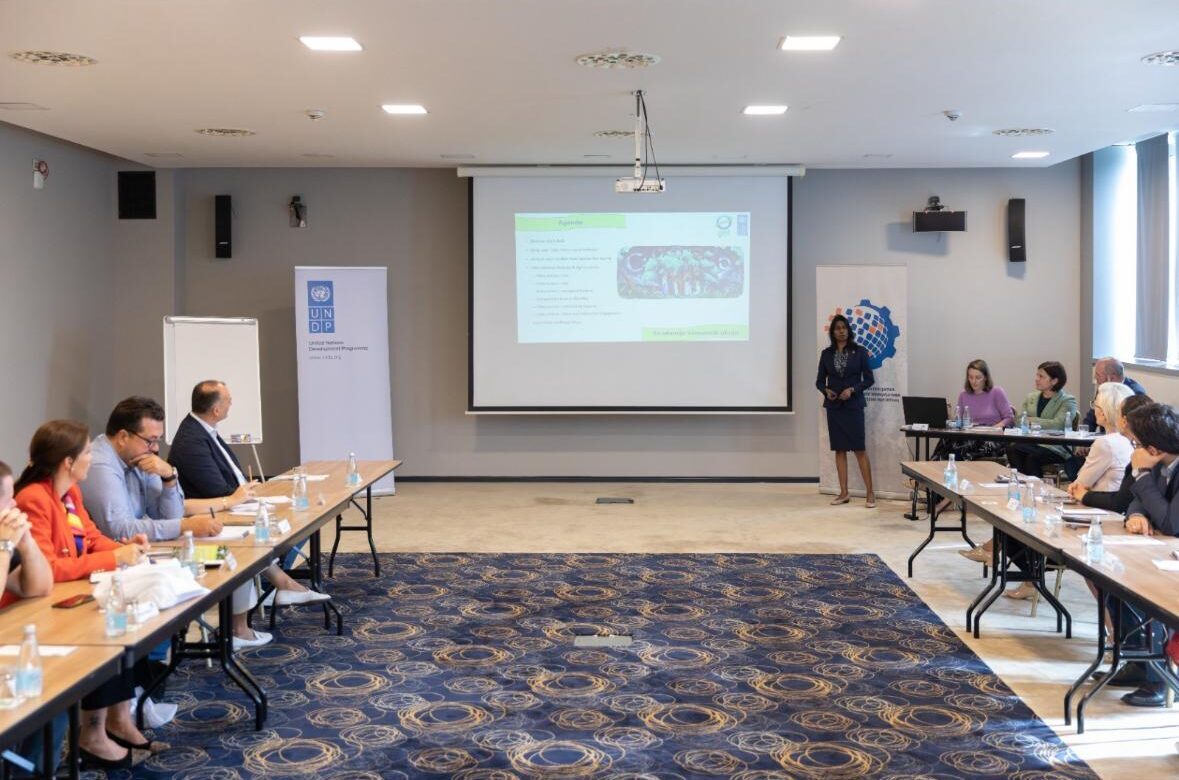
Sarajevo, Bosnia and Herzegovina | The United Nations Development Programme (UNDP) in Bosnia and Herzegovina launched the Climate Action Academy, a specialized initiative designed to strengthen the knowledge of elected representatives and decision-makers on climate change, environmental challenges, and policy responses.
The first module of the Academy, held in Sarajevo from, focused on “Biodiversity and Protected Areas.” The programme brought together policymakers and experts to examine the impacts of climate change on biodiversity and protected areas, while highlighting practical approaches for strengthening resilience, conservation, and sustainable management.
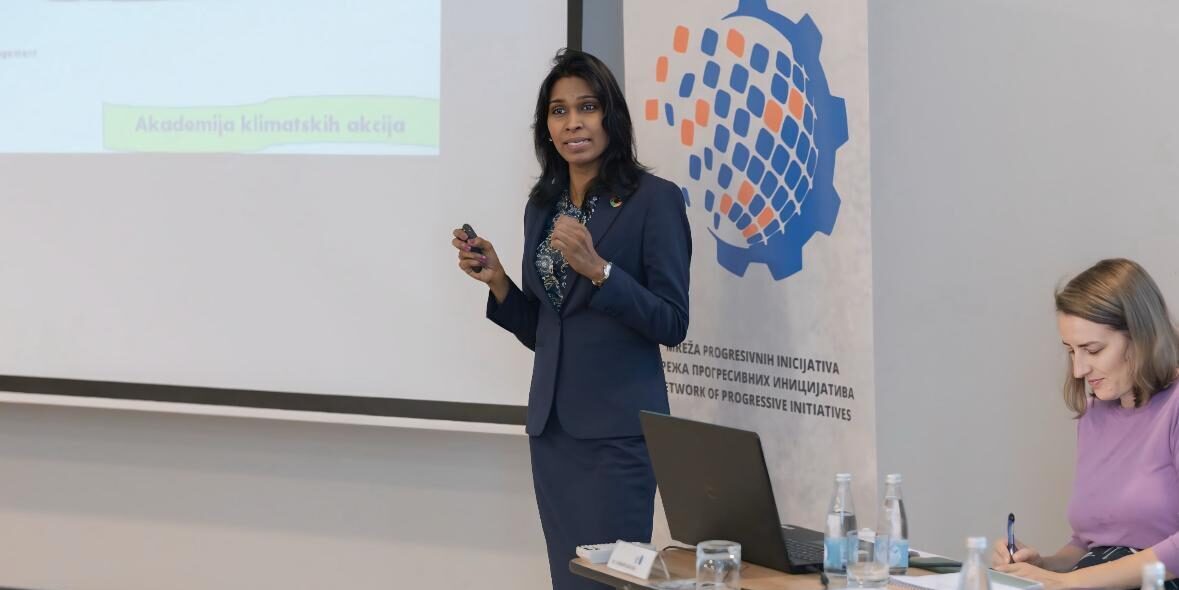
As part of the international expert faculty, Dr. Golda Edwin, Associate Professor in the Department of Environment at Manakula Vinayagar Institute of Technology (MVIT), Puducherry, India, and Executive Director of the Association for Promoting Sustainability in Campuses & Communities (APSCC), was invited by UNDP Bosnia and Herzegovina to serve as a Keynote Speaker for the module. The official invitation recognised her international experience as a researcher, advocate, and promoter of nature and biodiversity protection and ecosystem restoration, and highlighted the value of bringing international perspectives into Bosnia and Herzegovina’s policy discourse.
Dr. Edwin shared international examples of good practices in biodiversity conservation and ecosystem restoration, contributing to discussions on the policy and institutional measures required to address climate-related risks to biodiversity and protected areas.
The Academy was opened by Raduška Cupać, Head of the Energy and Environment Sector at UNDP, and Saša Magazinović, Member of the House of Representatives of the Parliamentary Assembly of Bosnia and Herzegovina and Chair of the Green Club of representatives from parliaments at different levels of government. The opening session emphasised the importance of cooperation and coordinated action on green policies across levels of government.
Connecting Biodiversity, Climate Action and Policy
The module addressed the urgent need to strengthen climate adaptation measures for biodiversity and protected areas. Bosnia and Herzegovina possesses exceptional biological and landscape diversity, while its protected-area network covers only a small proportion of the country’s territory. The programme therefore emphasised the need for systemic action extending beyond protected-area boundaries and supporting nature-positive development.
A field visit to the Protected Landscape “Bijambare” formed part of the programme, providing participants with an opportunity to gain practical insights into protected-area management. Representatives of the Cantonal Public Administration for Protected Areas and experts associated with UNDP’s Sustainability of Protected Areas in BiH (SPA) project shared their experiences and ongoing efforts to strengthen biodiversity resilience and the financial sustainability of protected areas.
The Climate Action Academy is implemented under UNDP’s Capacity Building Initiative for Transparency (CBIT) project, financed by the Global Environment Facility (GEF). The Academy aims to equip political representatives and decision-makers with greater understanding of climate and environmental issues and enable them to contribute more effectively to policy development and action.
Participants highlighted the importance of the Academy in strengthening their capacity to address climate and environmental challenges through parliamentary and representative functions. Subsequent modules were planned to address energy efficiency, renewable energy, energy transition, and environmental protection.
Strengthening APSCC’s International Engagement
The contribution to the UNDP Climate Action Academy reflects APSCC’s continuing engagement in international knowledge exchange, biodiversity conservation, ecosystem restoration, and sustainability education.
The invitation also underscores the value of connecting expertise from different regions and institutional contexts to support informed environmental decision-making and strengthen global cooperation for nature-positive development.
APSCC continues to advance its commitment to connecting knowledge, policy, education, and community action for a more sustainable future.