
Sustainable Water Management for Food Security
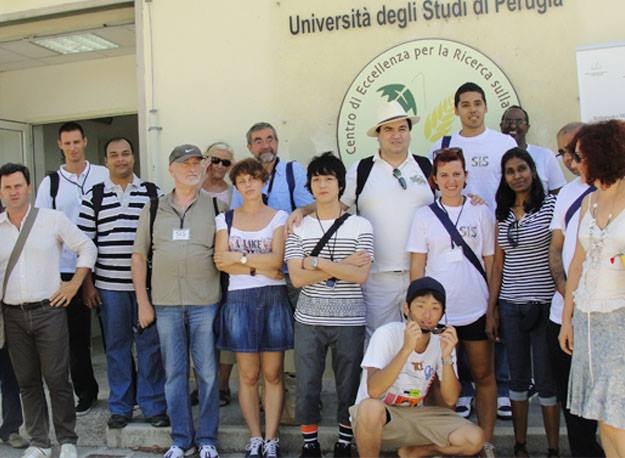
APSCC at the International Summer School on Sustainable Management and Promotion of Territory (SMPT) From August 24 to September 2, 2012, the picturesque town of Todi, Italy, played host to an extraordinary convergence of thought leaders, researchers, and sustainability advocates. The International Summer School on Sustainable Management and Promotion of Territory (SMPT) was held at the prestigious Agricultural Citadel – State Technical Agricultural College “A. Ciuffelli.” This initiative was a step forward in advancing global efforts toward sustainable territorial management. Sustainability in Focus The program, in its second edition, tackled pressing issues related to sustainable water management and its critical role in food security. It explored comprehensive themes, including: • The relationship between water resources and global food demand. • Strategies for enhancing water efficiency. • Solutions for mitigating water conflicts and ensuring equitable access. The Summer School underscored the pivotal role of water in supporting agriculture, rural livelihoods, and urban resilience, providing actionable insights for sustainable resource use. A Global Platform for Change The program welcomed participants from diverse professional and academic backgrounds, including agriculture, environmental management, ICT, and applied economics. It facilitated dynamic exchanges of knowledge, skill development, and networking opportunities among participants representing countries across the globe. APSCC was among the distinguished presenters. Her thought-provoking session delved into sustainable water practices and their potential to revolutionize food systems worldwide. Dr. Edwin emphasized actionable frameworks to bridge the gap between water availability and food demand in vulnerable regions. Knowledge and Hospitality Combined The Summer School was not just about academic rigor—it also embraced the spirit of collaboration and cultural exchange. Participants were accommodated in comfortable venues, with transportation and meal services arranged seamlessly. Field visits and practical demonstrations added a hands-on dimension to the theoretical learning, fostering a deeper understanding of sustainable practices. Key Takeaways The insights shared at the International Summer School were not only inspiring but also actionable. They highlighted the importance of: • Integrating water conservation with modern agricultural techniques. • Promoting governance reforms to ensure equitable resource distribution. • Empowering communities, especially women, in water management. • Reducing food wastage as a strategy to alleviate resource pressures. APSCC remains committed to advancing sustainability education and practices. By participating in programs like the International Summer School, APSCC reaffirms its dedication to fostering meaningful partnerships and impactful solutions for global environmental challenges. The lessons from Todi serve as a reminder that through collaboration and innovation, a sustainable future is achievable for all.
World Symposium on Sustainable Development at Universities – A Parallel Event to Rio+20
In alignment with the global push for sustainability and environmental consciousness, the Association for Promoting Sustainability in Campuses and Communities (APSCC) participated in the World Symposium on Sustainable Development at Universities – a parallel event to the Rio+20 conference. The event, which coincided with the 40th anniversary of the Stockholm Conference on the Human Environment and the 20th anniversary of the first Earth Summit held in Rio de Janeiro in 1992, brought together global leaders, educators, and sustainability advocates to review progress and chart the future path toward a more sustainable world. Reflecting on Two Decades of Progress The World Symposium served as a platform for revisiting the milestones achieved since the Earth Summit and Rio+20, emphasizing the critical need for action in addressing the Sustainable Development Goals (SDGs). While the world has made significant strides in promoting sustainability, the Symposium was an opportunity to critically assess where we stand today and explore the work still needed to ensure a future that supports both the environment and society. The event’s discussions were aimed at reinforcing the role of higher education and universities in shaping sustainability initiatives, with a strong focus on the integration of sustainability into campus life, research, and curricula. Education, as emphasized by numerous participants, remains the key to unlocking solutions that can transform societies and economies toward sustainability. APSCC’s Contribution: Sharing Knowledge and Action Plans As an organization committed to sustainability education and fostering change within communities and campuses, APSCC took an active role in the Symposium. APSCC presented insights on the importance of sustainability literacy in universities and the practical steps required to instill a culture of sustainability among students and professionals. The presentation highlighted the importance of integrating sustainability practices into academic curricula, raising awareness, and encouraging collaborative action for achieving the SDGs. APSCC’s contribution underlined the importance of partnerships and networks in advancing sustainability goals at the grassroots level. By working together with universities, NGOs, and other organizations, APSCC aims to empower future leaders to adopt sustainable practices that go beyond the classroom and into the real world. Future Pathways for Sustainable Development The Rio+20 event and the World Symposium were not only a reflection of the past achievements but a call to action for future progress. Discussions at the event focused on fostering collaboration between governments, the private sector, academia, and civil society to accelerate the achievement of the SDGs. In particular, education emerged as a cornerstone for societal transformation toward sustainability. APSCC’s participation reinforced its belief in the critical role of education and community engagement in driving meaningful and sustainable change. By educating future leaders on the complexities of sustainability, APSCC aims to empower them to tackle the global challenges of environmental degradation, climate change, and social inequity. A Call for Global Action The World Symposium on Sustainable Development at Universities, as a parallel event to Rio+20, marked an important milestone in the global conversation on sustainability. It reminded all stakeholders that sustainability is not just a long-term goal but an urgent and ongoing process that requires collective action from every sector of society. APSCC remains committed to furthering this dialogue by continuing to work with universities, policymakers, and communities across India and globally to support education and practices that are grounded in sustainability.