
APSCC Partners with ULSF to Promote the Talloires Declaration
The Association for Promoting Sustainability in Campuses and Communities (APSCC) announces its partnership with the Association of University Leaders for a Sustainable Future (ULSF). This collaboration aims to advance sustainability efforts within higher education institutions across India, focusing on promoting the Talloires Declaration. About ULSF and the Talloires Declaration ULSF serves as the Secretariat for the Talloires Declaration, an influential 10-point action plan established in 1990 to promote environmental sustainability in higher education. Signed by over 400 college and university presidents and chancellors globally, the declaration emphasizes the critical role of academia in addressing environmental, population, and sustainable development challenges. ULSF supports these objectives by facilitating research, publishing resources, and providing assessment tools to integrate sustainability into the core of teaching, research, operations, and community outreach. APSCC’s Role in India As ULSF’s strategic partner in India, APSCC will: Promote the Talloires Declaration: Engage Indian universities and colleges to become signatories, committing to sustainability as a fundamental focus of their mission. Facilitate Capacity Building: Provide resources and training to empower institutions to integrate sustainability into their academic and operational frameworks. Foster Collaborations: Build partnerships between Indian institutions and global signatories of the Talloires Declaration for knowledge sharing, research, and innovation. Advocate for Policy Change: Work with university leaders to align institutional policies with the 12 recommendations outlined by ULSF for fostering sustainability. Key Recommendations from ULSF The Talloires Declaration underscores actionable steps for universities to lead in sustainability, including: Raising awareness about environmental concerns. Increasing funding for interdisciplinary research on population, environment, and sustainable development. Encouraging faculty to engage in and prioritize interdisciplinary work. Establishing multidisciplinary centers of excellence for research and policy development. Developing partnerships with primary and secondary schools to enhance environmental education. These recommendations resonate deeply with APSCC’s mission to embed sustainability into academic and community practices. A Unified Vision for Higher Education This partnership represents a significant milestone in India’s sustainability journey. Universities are not just places of learning; they are pivotal in shaping the policies, practices, and thought leadership that influence broader society. By adopting the Talloires Declaration, Indian institutions can: Lead by example in environmental stewardship. Equip students with the knowledge and skills to address pressing global challenges. Foster a culture of innovation and sustainability-driven research. Join the Movement APSCC invites Indian higher education institutions to join this global initiative by becoming signatories of the Talloires Declaration. Together, we can advance a sustainable future by integrating environmental, population, and development issues into the fabric of higher education. For more information on how your institution can get involved, visit APSCC or ULSF. Let’s work together to make sustainability a cornerstone of education.
IIT-Madras and APSCC host the Sustainability Network Summit – 2015
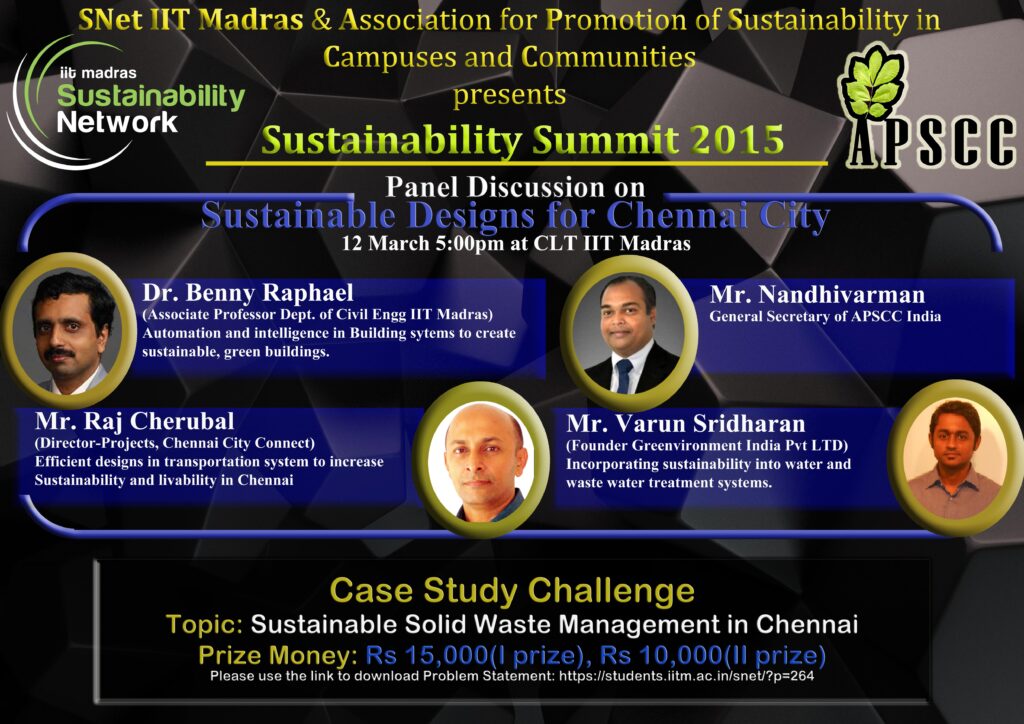
The Association for Promoting Sustainability in Campuses and Communities (APSCC) collaborated with IIT Madras to organize the Sustainability Summit 2015, an inspiring event held during the second week of March. This summit brought together experts, professionals, and students to engage in discussions and challenges centered around sustainability, with a particular focus on transforming Chennai into a model sustainable city. Event Highlights The Sustainability Summit 2015 consisted of two primary events: 1. Panel Discussion: Sustainable Designs for Chennai City The panel discussion focused on innovative and efficient designs to make Chennai a sustainable city. The event featured a panel of esteemed speakers who brought diverse perspectives and expertise: • Dr. Nandhivarman, General Secretary, APSCC — Shared his vision for achieving sustainability in urban planning and highlighted the pivotal role communities play in creating lasting environmental impact. • Dr. Benny Raphael, Associate Professor, Department of Civil Engineering, IIT Madras — An expert in building automation and green buildings, Dr. Benny discussed strategies to enhance energy efficiency in Chennai through sustainable architectural practices. • Shri. Raj Cherubal, Director of Projects, Chennai City Connect — Focused on efficient transportation designs, addressing how smart planning can improve mobility and overall livability in Chennai. • Shri. Varun Sridharan, Founder, Greenvironment India Pvt Ltd — Shared his insights from years of experience in water and wastewater treatment, explaining how advanced technologies can improve treatment systems and overcome associated challenges. Each panelist delivered a 20-minute talk, followed by an engaging Q&A session, where participants had the opportunity to ask thought-provoking questions and discuss real-world challenges and solutions. 2. Case Study Challenge: Sustainable Solid Waste Management in Chennai The Case Study Challenge provided a platform for students to address one of Chennai’s most pressing issues—solid waste management. Participants formed teams of 2–4 members to propose innovative solutions for Chennai’s waste management crisis. Submissions included detailed reports and presentations. Five selected teams were invited to present their ideas in front of a panel of judges. The challenge encouraged participants to explore aspects such as: • Efficient waste collection and segregation systems. • Technologies to enhance waste treatment and recycling. • Strategies to reduce landfill dependency. • Community involvement in sustainable practices. The event not only showcased the creativity of young minds but also provided actionable ideas that could be implemented to improve Chennai’s waste management system. Impact of the Summit The Sustainability Summit 2015 successfully bridged the gap between theory and practice by bringing together experts and students to brainstorm and propose sustainable solutions. Key outcomes included: • Knowledge Sharing: Experts from various fields shared insights and experiences, inspiring participants to think critically and innovatively about sustainability challenges. • Actionable Ideas: The case study challenge resulted in practical proposals for sustainable waste management, with the potential to influence real-world policies and practices. • Community Engagement: The event reinforced the importance of involving communities and youth in sustainability initiatives. Acknowledgments APSCC extends its heartfelt gratitude to IIT Madras and the Sustainability Network (S-NET) team for their partnership in organizing this impactful summit. A special thanks to the panelists and all participants whose contributions made this event a resounding success. As APSCC continues its journey towards promoting sustainability in campuses and communities, events like the Sustainability Summit 2015 reaffirm our belief in the power of collaboration and innovation to create a better, greener future. For more updates on APSCC initiatives and upcoming events, visit our website or follow us on social media. Let’s work together for a sustainable tomorrow!
Implementing Campus Greening Initiatives: Approaches, Methods and Perspectives
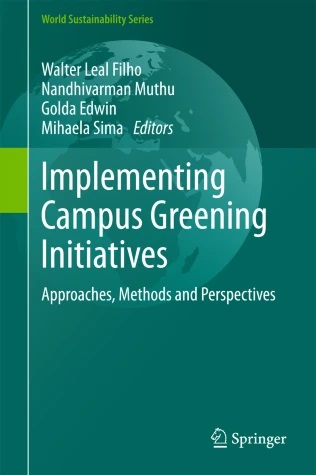
As part of the objectives of the Green Campus Summit, the Association for Promoting Sustainability in Campuses and Communities (APSCC) proudly announced the publication of the book “Implementing Campus Greening Initiatives: Approaches, Methods, and Perspectives” in collaboration with Springer Publications. This publication serves as a beacon for universities, policymakers, and sustainability practitioners worldwide, offering valuable insights into sustainable development practices in educational institutions. A Comprehensive Resource for Campus Greening Rooted in the principles of sustainable development, this book bridges the gap between theory and practice by addressing key challenges and opportunities in implementing green initiatives on campuses. Its global perspective ensures relevance to both industrialized and developing nations, highlighting the universal importance of sustainability in education. Key Features: •Global Initiatives: Showcases an extensive list of campus greening initiatives from around the world, offering inspiration and replicable models. •Case Studies: Embeds diverse case studies that reflect unique sustainability efforts in industrialized and developing countries alike. •Practical Insights: Explores issues, challenges, and opportunities related to green campus practices, providing actionable strategies for institutions. The Role of Education in Sustainability The book emphasizes the critical need to integrate sustainability concepts into education, starting from high school through college and university. By embedding these principles into the core of the student experience, institutions can prepare the next generation with the: Knowledge to understand environmental challenges. Skills to implement innovative solutions. Attitudes and Values needed to foster sustainable economies and societies. This approach not only enhances environmental consciousness but also equips students with tools to be future leaders in sustainability. Impact and Vision Through this book, we aim to: •Promote the ongoing efforts of universities worldwide in creating sustainable campuses. •Disseminate best practices, encouraging more institutions to join the global sustainability movement. •Foster collaboration between academic institutions, industries, and communities to build a greener future. Get Your Copy Discover actionable strategies and inspiring stories by ordering your copy of “Implementing Campus Greening Initiatives: Approaches, Methods, and Perspectives” today. 👉 Buy the Book Join the Movement APSCC invites universities, students, and sustainability enthusiasts to explore, implement, and advocate for green campus initiatives. Together, we can cultivate a future that harmonizes economic growth, social equity, and environmental integrity.
APSCC Partners with IIT Madras for the S-NET 2014 on “Green Vision”
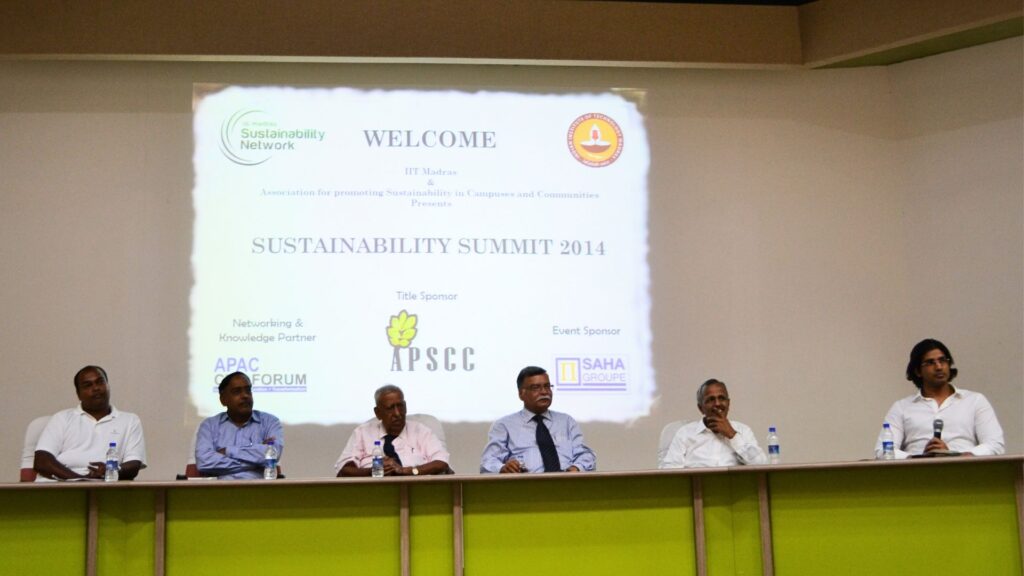
The Association for Promoting Sustainability in Campuses and Communities (APSCC) takes immense pride in having partnered with IIT Madras as the title sponsor for the S-NET 2014, an intellectually stimulating event centered around the theme of “Green Vision.” This collaboration reflected APSCC’s unwavering commitment to promoting sustainable practices and nurturing young minds to address pressing environmental challenges. About the Competition The S-NET Case Study Competition aimed to empower students to ideate and propose sustainable development strategies. The competition encouraged participants to develop a comprehensive “Green Vision 2020”, a six-year sustainable development plan. This plan needed to align with ecological, economic, legal, and social dimensions, ensuring long-term viability and scalability. The challenge required participants to address: 1. Pollution Reduction: Strategies to curb CO₂ and SPM emissions, manage waste efficiently, and restore water bodies. 2. Biodiversity Conservation: Protection of endangered flora and fauna in forests and marshlands. 3. Energy Efficiency: Proposing renewable energy solutions and improving energy usage. 4. Economic Feasibility: Integrating cost-effective measures, including innovative systems like cap-and-trade. 5. Legal Frameworks: Suggesting changes in environmental laws and their enforcement mechanisms. 6. Social and Cultural Integration: Raising public awareness, educating youth, and respecting local cultural values. 7. City Planning: Designing guidelines for Vilaspur’s future development to ensure sustainability for the next 50 years. The Role of APSCC As the title sponsor, APSCC’s partnership brought expertise, resources, and visibility to the event, ensuring its success. The association provided: • Panel Disussion: Participate in panel discussion on Green Campus Initiative – A Sustainability Approach • Guidance: Collaborating with experts to frame the competition’s objectives and evaluation criteria. • Outreach: Promoting the event across campuses and communities, inspiring students to participate. Event Highlights 1. Dynamic Case Study: Participants delved into the multifaceted issues of Vilaspur, from urban heat islands to marshland degradation and power shortages. The challenge demanded creativity, analytical thinking, and practical solutions. 2. Participation and Format: • Open to teams of 1-4 students from the same college. • Submission deadline: 18th March 2014. • Final round held at IIT Madras on 22nd March 2014, with accommodation and travel reimbursements for top teams. 3. Judging Criteria: Solutions were evaluated on originality, feasibility, and attention to detail by a panel of sustainability experts. The event celebrated not only the winners but also all participants for their innovative contributions. Outcome and Impact The S-NET Case Study Competition 2014 provided students with a platform to think critically about sustainability and devise actionable plans. The solutions presented had far-reaching implications, sparking ideas that could be applied to real-world scenarios. The competition: • Inspired a new generation of environmentally conscious leaders. • Promoted interdisciplinary collaboration among participants. • Strengthened APSCC’s commitment to fostering sustainability through education. Acknowledgments APSCC extends its heartfelt gratitude to IIT Madras and the Sustainability Network (S-NET) team for organizing such a meaningful event. This partnership underscores our shared vision of a greener, more sustainable future. Together, through initiatives like these, we continue to work towards a world where sustainability is not just an aspiration but a reality. About S-Net: S-Net is a student run organisation at the Indian Institute of Technology – Madras (IIT-M) that works to promote various sustainable practices and awareness programmes in the campus. Established in 2009, the organisation is mentored by the administration and alumni of IITM, SNET follows a simple ideal – implementing and practicing sustainable life style and promoting it all over the nation through proven examples. The vision of a progressive administration, passion of some determined alumni and enthusiasm of a group of students has evolved into a mission to make IIT Madras a model for the nation to follow. For more information about APSCC and our ongoing initiatives, visit our website or follow us on social media. Let’s shape a sustainable future together!
APSCC partners with Sustainability Literacy Test
The Sustainability Literacy Test (Sulitest), created in the wake of the United Nations Conference on Sustainable Development (Rio+20), stands as a pioneering tool in assessing sustainability literacy worldwide. With strong support from a range of UN bodies, renowned international and national academic institutions, and contributions from a global network of sustainability advocates, the Sulitest is playing a crucial role in advancing the Sustainable Development Goals (SDGs). A Global Tool for Sustainability Literacy The Sulitest is the first international assessment tool designed specifically to measure and enhance sustainability literacy. Higher education institutions, businesses, and organizations worldwide have embraced the test as a reliable means of assessing and improving the sustainability knowledge of their students, employees, and stakeholders. The test provides an invaluable resource for institutions aiming to foster a deeper understanding of sustainability concepts and their application in real-world contexts. Its localized approach ensures that the questions are not only relevant on a global scale but also resonate with the unique sustainability challenges and opportunities in different regions. APSCC: The Regional Expert Committee for India As part of its ongoing commitment to fostering sustainability education, the Association for Promoting Sustainability in Campuses and Communities (APSCC) has proudly partnered with the Sulitest. APSCC is now the Regional or National Expert Committee (RNEC) for India, responsible for managing the development of regional and locally focused sustainability questions. APSCC’s dedicated community, composed of academics, professionals, and students, works tirelessly to ensure the Sulitest reflects the unique sustainability priorities and challenges faced by India. Coordinated by the APSCC secretariat, the team contributes to the evolving body of knowledge that supports the test’s growth and accessibility. This collaboration is a significant step toward embedding sustainability literacy in India, contributing directly to the SDGs, and empowering individuals to make informed decisions that benefit the environment and society. By creating region-specific questions and supporting the Sulitest’s global mission, APSCC is helping to amplify sustainability awareness and actions across India. Building a Sustainable Future Through Education The partnership between APSCC and the Sulitest aligns with APSCC’s broader commitment to advancing environmental awareness, sustainability education, and social responsibility. This collaboration provides an opportunity to engage students, professionals, and organizations in a meaningful way, enabling them to measure their sustainability literacy and identify areas for growth. By actively contributing to the global push for sustainability, APSCC is ensuring that Indian participants in the Sulitest are equipped with the knowledge to drive positive change. Moreover, the test fosters a sense of responsibility, encouraging individuals to take action in their communities and workplaces to create a more sustainable world. Join the Movement As sustainability becomes an increasingly urgent global priority, the Sulitest offers an essential tool to assess and enhance our collective understanding of sustainability issues. Whether you’re an academic institution, a corporate entity, or an individual passionate about sustainable practices, the Sulitest presents an opportunity to contribute to the global sustainability agenda. To learn more about the Sulitest and how you can get involved, visit the official site: Sulitest – The Organization. Download Report
Growth vs. Sustainability: Are These Mutually Exclusive Goals?
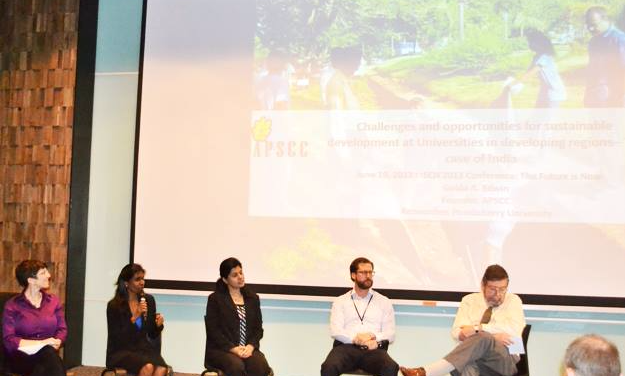
The 7th annual ISCN event was co-hosted by the International Sustainable Campus Network and the National University of Singapore.Combining the suggestions of her fellow panelists, Golda Edwin, APSCC, tackled the topic of describing what a sustainable campus looks like in a developing country. The 7th Annual International Sustainable Campus Network (ISCN) Conference, co-hosted by the National University of Singapore (NUS), brought together global leaders in sustainability to address the theme “The Future is Now.” Held in June, 2013, in Singapore, the event showcased best practices, innovative approaches, and visionary strategies for advancing campus sustainability worldwide. The conference served as a call to action for universities to accelerate their contributions to sustainable development and to catalyze transformative change for a sustainable future. Leaders from academic institutions, industries, and sustainability networks gathered to exchange ideas, foster collaboration, and celebrate achievements in campus sustainability. APSCC’s Insightful Contribution A highlight of the conference was the plenary session titled “Growth vs. Sustainability: Are These Mutually Exclusive Goals?” Among the distinguished speakers, Dr. Golda Edwin of the Association for Promoting Sustainability in Campuses and Communities (APSCC), provided an insightful perspective on what a sustainable campus looks like in a developing country. Drawing on APSCC’s experiences in fostering sustainability in diverse campus environments, Edwin shared actionable strategies for developing countries, emphasizing the need for: Cost-effective solutions that align with local resources and cultural contexts. Community engagement to ensure sustainability efforts have grassroots support and impact. Education and awareness programs to create a culture of environmental stewardship among students, faculty, and staff. Edwin’s presentation highlighted the importance of adapting global sustainability frameworks to local realities, ensuring that the path toward sustainable campuses is inclusive and equitable. Keynotes and Plenary Highlights The conference featured thought-provoking keynote addresses from global sustainability leaders: •Professor Tommy Koh, Ambassador-At-Large, Ministry of Foreign Affairs of Singapore, emphasized the urgent need for global cooperation in addressing climate challenges. •Dr. Gerhard Schmitt, Director of the Singapore-ETH Centre, shared innovative approaches to urban sustainability and campus design. Plenary sessions addressed critical themes, including: •Beyond Carbon: The Next Generation of Sustainability Goals Speakers like Rosi Kerr (Dartmouth College) and Christopher Silva (Hamad bin Khalifa University) discussed the importance of redefining sustainability metrics beyond carbon footprints to include social equity and resilience. •Engaging Universities in Co-Creation for Urban Sustainability Thought leaders such as Esther Barazzone (Chatham University) and Greg Trencher (University of Tokyo) explored the intersection of academic research and urban planning. Campus Sustainability Awards The conference celebrated outstanding sustainability achievements through the Campus Sustainability Awards, recognizing universities for their innovation and leadership: Excellence in Building: University of Gothenburg Excellence in Campus: Lappeenranta University of Technology Excellence in Integration: Chatham University and Anglia Ruskin University Excellence in Student Leadership: Zhejiang University These awards underscored the diverse ways in which campuses can lead the charge toward sustainability, from eco-friendly infrastructure to fostering student-led initiatives. A Collaborative Future The ISCN 2013 Conference was more than an event; it was a powerful reminder of the role universities play in shaping a sustainable future. By sharing best practices and fostering dialogue, institutions worldwide are better equipped to address the challenges of climate change, resource conservation, and community resilience. The participation of APSCC and the contributions of leaders like Golda Edwin demonstrated the importance of tailoring global sustainability goals to local contexts. As universities continue to innovate and collaborate, the vision of a sustainable world led by knowledge, innovation, and inclusivity becomes ever more achievable. For more information and access to conference materials, visit the ISCN 2013 Conference Summary Report and presentation archives.
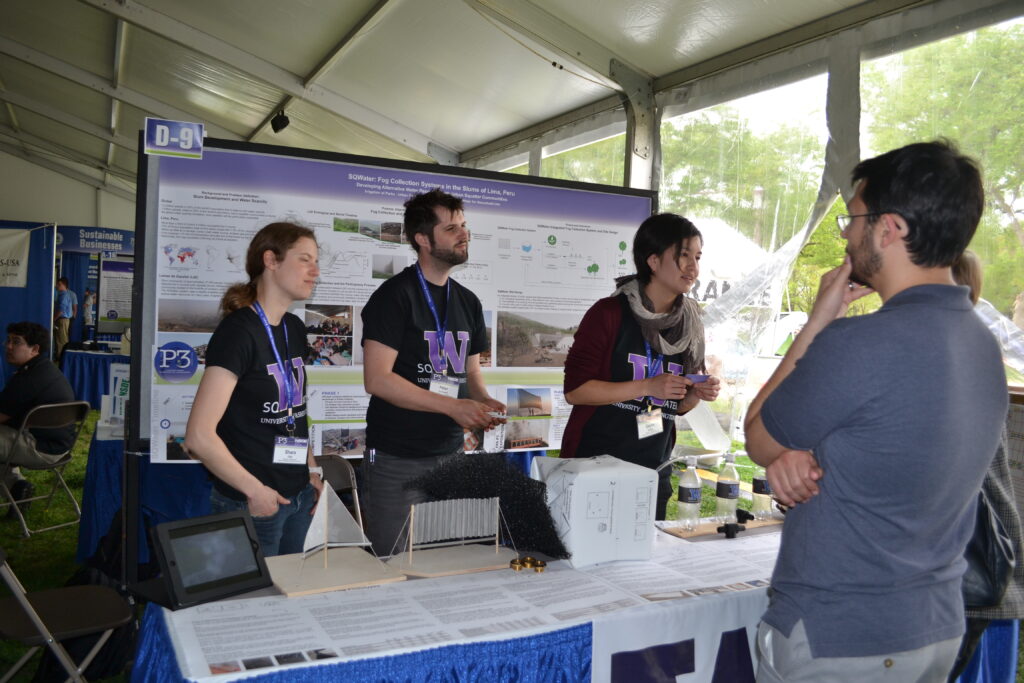
APSCC at the US EPA’s 9th Annual National Sustainable Design Expo at Washington DC
VIT bags award at the Green Campus Summit
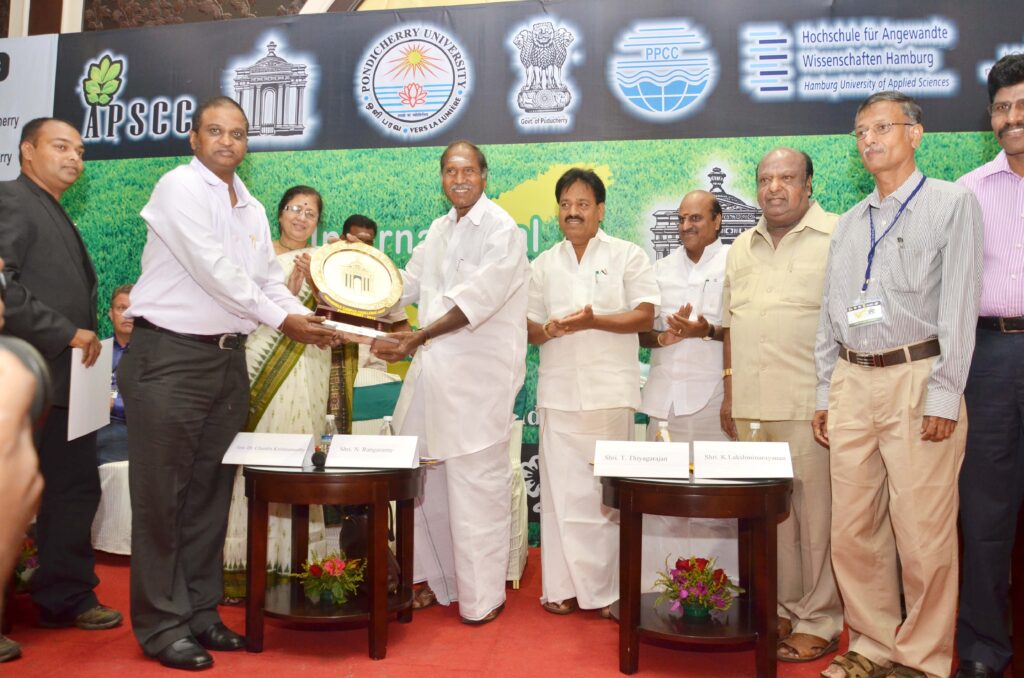
In a significant achievement for VIT University, Vellore, the institution has been honored with the Campus Challenge 2013 Award, presented by the Association for Promoting Sustainability in Campuses and Communities (APSCC). The award, which recognizes excellence in promoting sustainability on university campuses, was conferred at the prestigious Green Campus Summit 2013 held in Puducherry, India. The award was presented by Puducherry Chief Minister N. Rangasamy to Sankar Viswanathan, the Vice-President of VIT University, in recognition of the university’s exemplary commitment to sustainable practices and its leadership in implementing green initiatives that have a lasting positive impact on the environment. The Green Campus Summit: A Platform for Recognition The Green Campus Summit 2013, held in Puducherry, was a significant gathering of thought leaders, educators, and sustainability advocates from around the world. With over 200 delegates representing 12 countries, the summit was a melting pot of ideas and strategies aimed at advancing sustainability within academic institutions. The Campus Challenge Award at the Green Campus Summit is one of the most respected recognitions for universities making substantial progress in sustainability. By conferring this award, APSCC encourages higher education institutions to adopt innovative and impactful solutions that not only benefit the campus community but also contribute to the larger goal of environmental preservation. APSCC’s Role in Promoting Sustainable Campuses The Association for Promoting Sustainability in Campuses and Communities (APSCC) plays a crucial role in fostering sustainability within educational institutions worldwide. Through initiatives like the Green Campus Summit and the Campus Challenge Award, APSCC supports the global transition to sustainable development by highlighting best practices, sharing knowledge, and promoting collaboration among institutions. As an advocate for green campuses, APSCC’s efforts help raise awareness and drive action toward creating campuses that are more energy-efficient, waste-conscious, and environmentally responsible. By celebrating institutions like VIT University, APSCC continues to inspire educational institutions to take bold steps in fostering sustainability. Looking Forward: A Sustainable Future for All VIT University’s win at the Sustainable Campus Challenge 2013 is not just a recognition of its efforts to date but a commitment to future sustainability goals. As VIT continues to lead by example, it sets a powerful precedent for other universities to follow suit in their sustainability journeys. APSCC congratulates VIT University for its outstanding achievement and encourages other academic institutions to embrace the challenge of creating greener, more sustainable campuses. With continued efforts in education, innovation, and collaboration, the path toward a greener, more sustainable future becomes clearer for universities across the globe.
The Green Campus Summit 2013: A Global Dialogue on Sustainability in Education
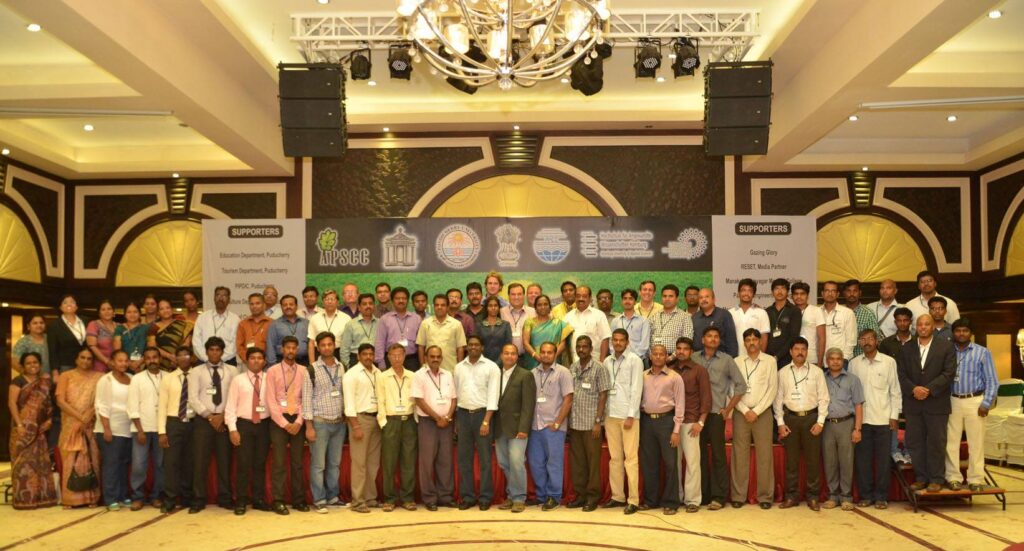
In April 2013, the Association for Promoting Sustainability in Campuses and Communities (APSCC) organized the landmark Green Campus Summit (GCS-2013), held in Puducherry, India. This international event, focused on promoting sustainable practices in higher education, was held under the auspices of prestigious institutions such as the Research and Transfer Centre “Applications of Life Sciences” of Hamburg University of Applied Sciences (Germany), Pondicherry University (India), London Metropolitan University (UK), and the Pondicherry Pollution Control Committee – Government of Puducherry. A Global Gathering for a Sustainable Future The Green Campus Summit 2013 brought together over 200 delegates from 12 countries, representing a diverse array of industrialized and developing regions. The summit served as a platform for higher education institutions, government bodies, and industry leaders to engage in meaningful discussions about how campuses can become more environmentally sustainable and serve as models for broader societal change. The event underscored the importance of integrating sustainability into the academic infrastructure, curriculum, and operations of universities and colleges worldwide. With delegates from across the globe, the summit provided a unique opportunity for cross-cultural exchange of ideas, fostering collaboration among institutions committed to advancing sustainability in education. Key Themes and Discussions At the heart of the summit were discussions on a wide range of topics related to green campuses and sustainable practices in higher education. Some of the key themes included: •Sustainable Campus Design: How universities can adopt green building principles, renewable energy sources, and eco-friendly infrastructure to reduce their environmental footprint. •Waste Management and Recycling: Strategies for reducing waste, promoting recycling, and creating a circular economy within campuses. •Sustainability in the Curriculum: How academic institutions can integrate sustainability into their curricula to educate students on the importance of environmental stewardship. •Community Engagement and Advocacy: The role of universities in promoting sustainability beyond campus boundaries by engaging with local communities and advocating for environmental protection policies. The diverse set of topics was carefully crafted to highlight not only the environmental challenges faced by campuses but also the innovative solutions that could be implemented to create more sustainable educational environments. Bridging the Gap Between Developed and Developing Regions A notable aspect of the Green Campus Summit was the representation of both industrialized and developing regions. The event highlighted how campuses across the world, regardless of their economic status, can adopt sustainable practices. For developing countries, the summit emphasized the importance of low-cost, high-impact sustainability measures, while for industrialized nations, the focus was on integrating cutting-edge technologies and creating scalable models for sustainability. This global perspective was crucial in fostering a dialogue between countries with varying levels of resources, allowing for shared learning and the identification of practical solutions that can be adapted to different contexts. Outcomes and Future Directions The Green Campus Summit 2013 was not just a meeting of minds but a catalyst for future action. By bringing together a diverse group of stakeholders, the summit paved the way for several collaborative initiatives, partnerships, and projects aimed at making campuses greener and more sustainable. One of the key outcomes was the recognition that sustainability must be embedded in every aspect of campus life – from buildings and energy use to teaching and research. The summit also emphasized the need for ongoing research, knowledge-sharing, and policy advocacy to ensure that the goals of sustainable campuses are not just met but exceeded. APSCC’s Role in Promoting Green Campuses As the organizing body, APSCC played a pivotal role in shaping the summit’s success. The association’s dedication to promoting sustainability in education through events like the Green Campus Summit highlights its ongoing commitment to creating a sustainable future for educational institutions and the communities they serve. The GCS-2013 was a crucial step in APSCC’s mission to drive environmental consciousness and sustainability awareness across educational institutions globally. It reinforced the need for global collaboration, the exchange of best practices, and the continued integration of sustainability into the fabric of university life. As we move forward, the discussions and collaborations sparked at the Green Campus Summit continue to inspire change in universities around the world. APSCC remains committed to fostering such initiatives, ensuring that educational institutions not only become models of sustainability but also equip the leaders of tomorrow with the knowledge and tools to build a greener, more sustainable world.
UNESCO IHE – Research on Water Resources and Treatment
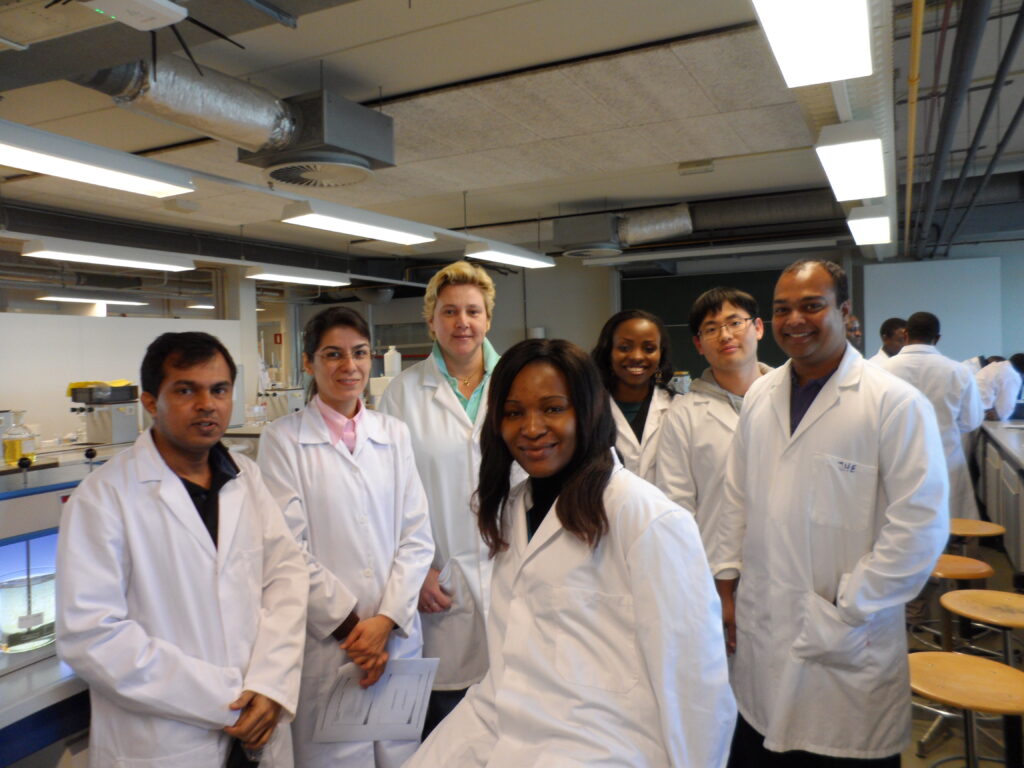
Research on Water Resources and Treatment: Groundbreaking Work on Constructed Wetlands In an era where water scarcity and contamination are pressing global challenges, innovative solutions for water resource management are essential. The Association for Promoting Sustainability in Campuses and Communities (APSCC) has been at the forefront of this mission, leveraging research and partnerships to address these challenges. One of the APSCC team’s significant achievements in water resource management came after training at the UNESCO-IHE Institute for Water Education, the world’s largest international graduate water education facility, located in Delft, the Netherlands. Innovation in Constructed Wetlands for Water Treatment Following their training at UNESCO-IHE, the APSCC team embarked on an innovative research project focused on constructed wetlands, an eco-friendly water treatment method that mimics the natural processes occurring in wetlands. Constructed wetlands are widely used to treat wastewater by harnessing the natural filtration properties of plants and microorganisms, offering an affordable and sustainable solution to wastewater management. APSCC’s unique approach involved designing a constructed wetland that utilized locally available native plant species. This design not only reduced the need for importing non-native species but also ensured the long-term sustainability of the system by aligning it with the local ecosystem. The Role of Arundo in Water Treatment Among the various plant species tested, APSCC’s study highlighted the Arundo species, a native plant, as an equally efficient alternative to the well-established Typha species (commonly known as cattail), which is traditionally used in constructed wetland systems. Typha has been widely studied for its efficiency in wastewater treatment, but APSCC’s research demonstrated that Arundo, another native species, can match Typha in terms of water filtration effectiveness. This finding is particularly valuable as Arundo is more adaptable to a range of local environments and can be cultivated more easily in various regions. The study, published in peer-reviewed journals, provided concrete evidence that native plants like Arundo can be effectively used for water treatment, offering a sustainable, cost-effective, and locally relevant solution to wastewater management challenges. The research not only challenges conventional wisdom but also paves the way for more locally tailored water treatment methods. Sustainable Solutions for Local Communities The implications of APSCC’s work extend far beyond the laboratory. By using locally sourced plant species, constructed wetlands can be integrated into communities more effectively, reducing the reliance on external resources and ensuring that the solution is both ecologically and economically sustainable. APSCC’s research also contributes to the broader Sustainable Development Goals (SDGs), particularly Goal 6: Clean Water and Sanitation. By promoting innovative water treatment methods that are environmentally friendly and community-based, APSCC is helping to ensure that clean water access becomes more sustainable and accessible, especially in rural or underserved regions. A Step Toward a Greener Future This research reflects APSCC’s commitment to sustainability and innovation in addressing critical environmental challenges. By combining knowledge from international training with local expertise, APSCC is developing solutions that not only benefit the environment but also enhance the resilience of local communities. Through initiatives like this, APSCC continues to push the boundaries of sustainability, encouraging practical, science-backed solutions for water treatment, ecosystem preservation, and community development. The research on constructed wetlands using native species like Arundo represents a small but powerful step in creating a more sustainable and resilient world.