
World Environment Day 2021 #EcosystemRestoration
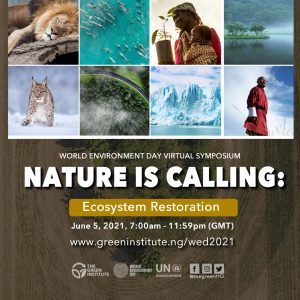
APSCC partners with “The Green Institute” for the World Environment Day Virtual symposium themed “Nature is Calling,” that will take place on June 5, 2021. Over 25 renowned sustainability leaders from around the world will present talks and breakout sessions at this paradigm-shifting online event to discuss the restoration of our ecosystem on the World Environment Day and beyond. For more details, visit https://greeninstitute.ng/wed2021
Wildlife Protection & Conservation Network
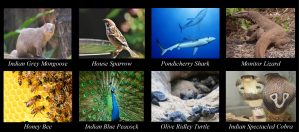
India, a country renowned for its rich biodiversity and traditional knowledge, faces an alarming crisis of habitat loss and species extinction due to human activities. According to the Ministry of Environment, Forest and Climate Change (MoEFCC), the fragmentation, degradation, and loss of ecosystems are irreversible and pose severe threats to biological diversity, jeopardizing human well-being. This calls for urgent conservation action to safeguard the nation’s natural wealth. The Intergovernmental Science-Policy Platform on Biodiversity and Ecosystem Services (IPBES) has reinforced the gravity of this issue, highlighting that 1 million species worldwide are under threat of extinction due to human-induced activities. The need for transformative changes is paramount to restore and protect the interconnected web of life that sustains all ecosystems and human well-being. Global Perspective: The Call for Transformative Action The United Nations and the Convention on Biological Diversity (CBD) underscore the urgent need for action. This initiative directly supports the goals of the UN Decade on Biodiversity (2011-2020), focusing on “Living in Harmony with Nature,” and the UN Decade on Ecosystem Restoration (2021-2030), emphasizing the need to repair and rejuvenate ecosystems. Against this backdrop, a unified response is necessary to counteract threats such as illegal poaching, trafficking, and habitat destruction. To drive this transformative change, a consortium of organizations led by the Association for Promoting Sustainability in Campuses and Communities (APSCC), alongside Pondicherry University and various Government of Puducherry Departments, has launched the Wildlife Protection & Conservation Network. Focus of the Initiative: Fauna and Habitats of Concern In the first phase, the program identifies key species and habitats requiring urgent conservation efforts, based on Aichi Biodiversity Targets 11, 12, and 13 of Strategic Goal C. These include: Peacock (Pavo cristatus) Indian Grey Mongoose (Herpestes edwardsi) Olive Ridley Turtle (Lepidochelys olivacea) Monitor Lizard (Varanus bengalensis) Bee (Apis cerana indica) Pondicherry Shark (Carcharhinus hemiodon) House Sparrow (Passer domesticus) Indian Spectacled Cobra (Naja naja) Wetlands as critical habitats supporting diverse species. These species and habitats represent the intricate web of India’s biodiversity and are vital to ecological balance. Strategic Goals and Actions Species Conservation Prevent extinction by addressing threats like poaching, trafficking, and habitat destruction. Develop and implement conservation networks tailored to each species. Ecosystem Restoration Conduct habitat analysis, mapping, and restoration efforts for degraded ecosystems. Promote the integration of conservation strategies into urban and rural development plans. Awareness and Education Engage students and the public through training programs, workshops, and community outreach initiatives. Highlight the interconnectedness of biodiversity and human well-being. Policy and Enforcement Support enforcement authorities in addressing wildlife crimes such as illegal poaching and trafficking. Advocate for legal frameworks to safeguard biodiversity. A Collaborative Conservation Effort The initiative fosters partnerships across communities, governments, and organizations, leveraging collective action to address biodiversity loss. Women’s participation and youth engagement are prioritized, ensuring an inclusive approach to conservation. Outcomes and Long-Term Goals By implementing this initiative, the Wildlife Protection & Conservation Network aims to: Prevent species extinction and restore ecosystems. Catalyze public and student involvement in biodiversity conservation. Achieve national and global biodiversity goals, contributing to the 2030 Agenda for Sustainable Development. Join the Movement We invite you to become part of this transformative change by joining the Wildlife Protection & Conservation Network. Email us at info@apsccindia.org for further details. By uniting for the conservation of India’s unique biodiversity, we can ensure a sustainable future for all. Together, let’s answer nature’s call and restore the balance of life on Earth. 🌏
International Conference on Interdisciplinary Approaches to Environment, Ecosystems and Sustainable Development
The International Conference on Interdisciplinary Approaches to Environment, Ecosystems & Sustainable Development (ICIAEESD) is a pioneering initiative aimed at addressing the multifaceted challenges of sustainability, environment protection, and ecosystem restoration. Organized in Puducherry, this event represents a collaborative effort among several esteemed institutions. Aims of the Conference The conference seeks to promote innovative solutions and foster collaboration among academia, practitioners, policymakers, and students to explore sustainable development from interdisciplinary perspectives. It aligns with global goals such as the UN Sustainable Development Goals (SDGs), emphasizing the importance of integrating sustainability into education, research, and community engagement. Why ICIAEESD? Environmental degradation and climate challenges have placed sustainability at the forefront of global priorities. The conference addresses these concerns through themes like environmental law, cultural connections to sustainability, and the role of technology in achieving SDGs. It provides a platform for sharing ideas, showcasing best practices, and inspiring transformative actions for a sustainable future. Key Themes and Sub-Themes Constitution and Environmental Protection Environmental laws and policies in India Waste management rules and the Green Tribunal Legal frameworks for sustainable ecosystems Human, Culture, and Environment Eco-criticism and eco-philosophy Sustainable tourism and cultural heritage conservation Environmental education as a tool for change International Treaties and Conventions Environmental hazards and disaster management Global environmental treaties and their impact Sustainable Development Goals (SDGs) Women empowerment in sustainable practices Climate action, biodiversity, and ecosystem restoration Green technology for sustainable industries Highlights of ICIAEESD Multi-Disciplinary Participation The conference invites academicians, researchers, students, and environmental activists from diverse disciplines to contribute through papers, presentations, and discussions. Knowledge Sharing and Networking Participants will have opportunities to exchange ideas, learn from experts, and build partnerships for sustainable initiatives. Showcasing Best Practices Universities and institutions will display their work in areas like environmental law, green campus strategies, and innovative sustainability projects. Publication Opportunities Accepted papers will be published by reputed publishers, offering contributors global visibility for their work. Organizers and Partners Legal Services Clinic An initiative of the National Legal Services Authority (NALSA), the Legal Services Clinics at Pondicherry University and KMGIPGSR are committed to providing legal aid, spreading legal awareness, and empowering marginalized communities. Pondicherry University Since its inception in 1985, Pondicherry University has been a center of excellence in education, research, and cultural integration, dedicated to fostering sustainable practices. KMGIPGSR With a focus on access, equity, and quality, KMGIPGSR has made significant contributions to higher education and research in Puducherry. APSCC As a UN Decade on Biodiversity partner, APSCC works on sustainability strategies in education and communities, promoting environmental justice and fostering transformative change. Join Us for ICIAEESD Don’t miss this opportunity to be part of a global movement for sustainable development. Contribute your ideas, showcase your work, and collaborate with experts to shape a better future.
Training and Capacity Building for the Compliance of ‘Green Protocol’ @Puducherry
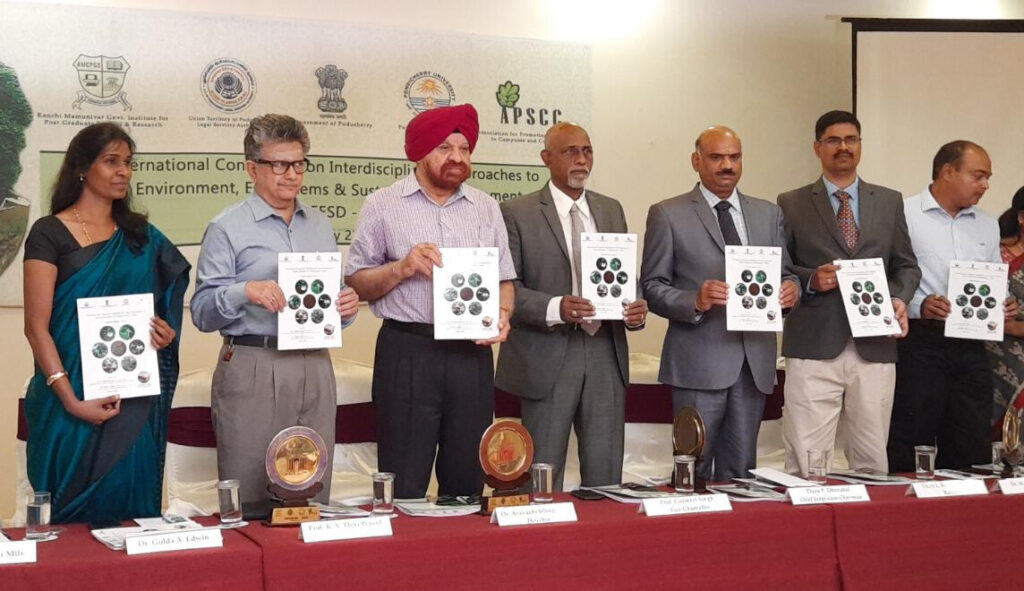
The Association for Promoting Sustainability in Campuses and Communities (APSCC), in collaboration with Université Panthéon-Sorbonne, Paris, Pondicherry University, and Jawahar Navodaya Vidyalaya, successfully conducted a transformative training and capacity-building program focused on the ‘Green Protocol’. This initiative brought together postgraduate students, researchers, and young learners to explore sustainable practices and align their efforts with global environmental goals. Program Highlights Focus Areas The program emphasized the water-food-energy-biodiversity nexus, fostering awareness and skills in: Resource Recovery: Techniques to recycle and repurpose resources for a circular economy. Conservation Efforts: Protecting biodiversity and sustaining ecosystems. Entrepreneurship: Encouraging green business ideas and startups. Special attention was given to ‘Regenerative Agriculture’, an integrated approach that: Restores Topsoil Health: Enhancing soil biodiversity and nutrient availability. Strengthens the Water Cycle: Improving water retention and supporting ecosystem services. Mitigates Climate Change: Promoting bio-sequestration and resilience against environmental challenges. Capacity-Building Objectives The training aimed to equip participants with the knowledge and tools to: Develop and implement green campus strategies for sustainability. Create replicable frameworks for universities, colleges, and schools worldwide. Drive institutional and community-wide compliance with the ‘Green Protocol.’ Release of the Activity Report The pictorial activity report was ceremonially released by the Hon’ble Vice-Chancellor Gurmeet Singh in the presence of notable dignitaries: Thiru P. Dhanabal, Chief Judge & Chairman, District Legal Services Authority, Puducherry. Thiru L. Robert Kennedy Ramesh, Principal Sub-Judge & Secretary, District Legal Services Authority, Puducherry. Prof. K.V. Devi Prasad, Pondicherry University. Aravazhi Irissappane, Director. Dr. Golda A. Edwin, Executive Director, APSCC (Convener). Dr. M. Nandhivarman, Secretary-General, APSCC. Dr. Stephanos Stephanides, University of Cyprus. Impact and Future Goals This initiative set a roadmap for integrating sustainable practices into academic institutions worldwide, offering: Comprehensive Frameworks: For green campuses and eco-friendly infrastructure. Global Networking: Facilitating collaborations between students, researchers, and thought leaders from diverse institutions. Actionable Insights: Empowering participants to drive real-world change through conservation, resource management, and innovation. The program also fostered a deeper understanding of regenerative agriculture as a cornerstone for climate resilience and sustainable ecosystems. Click here to download the activity report
Transforming the Office of the Chief Secretariat, Puducherry, into a Sustainable Building
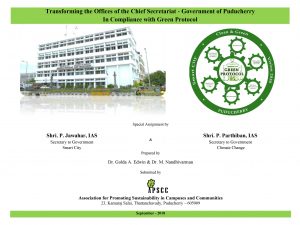
The Association for Promoting Sustainability in Campuses and Communities (APSCC), in collaboration with Shri. P. Jawahar, IAS (Secretary to Government – Smart City) and Shri. P. Parthiban, IAS (Secretary to Government – Climate Change), has undertaken a transformative initiative to make the Chief Secretariat, Puducherry, a model of environmental sustainability. This project aligns with the Green Protocol, focusing on sustainable practices in energy, water, waste, and biodiversity management. Why the Green Protocol? The Green Protocol provides a framework for environmentally responsible practices, promoting sustainability in offices and communities. It emphasizes: Reducing unsustainable consumption patterns (Rio Declaration, Principle 8). Implementing precautionary measures to prevent environmental degradation (Principle 15). Encouraging youth involvement in sustainability (Principle 21). Goals of the Initiative This project aims to: Reduce the environmental footprint of the Chief Secretariat. Foster eco-friendly office practices. Enhance indoor and outdoor environmental quality. Educate employees about sustainability and inspire wider adoption of green living. Key Recommendations for a Sustainable Secretariat More than 40 measures were recommended to transition to a green and environmentally sustainable office. Energy Conservation Replace traditional tube lights with LED lights to save energy. Install motion sensors to reduce unnecessary electricity usage. Use Energy Star-certified appliances like printers, fans, and air conditioners. Introduce solar power to harness renewable energy. Water Management Install low-flow aerators and dual-flush toilets to minimize water wastage. Recycle greywater for gardening and cleaning. Encourage staff to use reusable water bottles to eliminate disposable plastic waste. Indoor Air Quality Improvement Introduce air-purifying plants such as Peace Lily, Snake Plant, and Bamboo Palm. Avoid toxic cleaning products by switching to biodegradable alternatives. Opt for low-VOC paints and eco-friendly furnishings. Waste Management Set up color-coded recycling stations for waste segregation. Use recycled paper and eco-friendly office supplies. Establish an e-waste recycling program with authorized recyclers. Sustainable Office Furnishings Use reclaimed wood for furniture and décor. Replace plastic pots with natural materials like clay or bamboo. Create living walls with self-watering systems to add greenery indoors. Paperless Office Practices Reduce printed materials by encouraging digital workflows. Use smaller, eco-friendly fonts to minimize ink usage. Default printers to double-sided printing. Eco-Friendly Office Practices Switch to business casual dress codes to reduce air conditioning requirements. Use recycled seed paper for stationery, including visiting cards and pencils. Encourage consumption of organic, local food to reduce the environmental impact of “food miles.” Implementation Phases Planning and Assessment Evaluate the existing resource consumption of the Chief Secretariat, including water, energy, and waste. Identify areas for improvement and prioritize action. Strategic Implementation Install recommended fixtures and systems for energy and water conservation. Conduct workshops and training sessions for employees on sustainable practices. Monitoring and Feedback Regularly monitor the progress of implemented changes. Gather employee feedback to refine strategies and improve effectiveness. Broader Impact of the Initiative This initiative has the potential to inspire other government and private institutions to adopt similar green protocols. By transforming the Chief Secretariat into a sustainable office, Puducherry sets an example of how eco-friendly practices can become integral to workplace culture. Sustainability is no longer a choice but a necessity. The efforts to green the Chief Secretariat reflect a commitment to environmental responsibility and intergenerational equity. By adopting the Green Protocol, Puducherry takes a significant step toward creating a sustainable future, proving that small changes can lead to big impacts. 🌱
Bioelectrochemical Technologies for Waste to Energy Conversion and Resource Recovery

The Centre for Pollution Control and Environmental Engineering at Pondicherry University, in collaboration with the Science and Engineering Research Board (SERB-DST) and the Association for Promoting Sustainability in Campuses and Communities (APSCC), successfully hosted a National Workshop on Bioelectrochemical Technologies for Waste to Energy Conversion and Resource Recovery from July 22-24, 2019. This innovative workshop brought together experts, researchers, students, and industry professionals to explore cutting-edge bioelectrochemical technologies for sustainable energy production, waste management, and resource recovery. Why Bioelectrochemical Technologies Matter Bioelectrochemical Systems (BES) are transformative innovations that integrate biology and electrochemistry to address global sustainability challenges. These systems are capable of: Recovering Nutrients: Extracting valuable nutrients like phosphorus and nitrogen from waste streams. Producing Electricity: Generating renewable energy while treating waste. Treating Wastewater: Efficiently purifying water and recovering usable resources. Workshop Highlights The workshop offered a unique blend of academic lectures, hands-on training, and expert interactions. Key highlights included: Lectures by Eminent Experts Renowned speakers from across India shared their expertise: Dr. S. Venkata Mohan (CSIR-IICT, Hyderabad): Insights into advanced microbial fuel cells and resource recovery systems. Dr. Prasenjit Mondal (IIT Roorkee): Innovative approaches to sustainable energy production. Dr. Aravind K. Mungray (SVNIT Surat): Developments in bioelectrochemical systems for clean energy. Dr. Praveena Gangadharan (IIT Palakkad): Bioelectrochemical techniques for wastewater treatment. Hands-On Training Participants gained practical knowledge in: Design and Fabrication of Bioelectrochemical Systems: Building and testing microbial fuel cells (MFCs) and related systems. Electrochemical Techniques: Applying tools like cyclic voltammetry and electrochemical impedance spectroscopy (EIS) in real-world scenarios. Poster and E-Poster Presentations Participants showcased innovative research on themes like: Microbial electrosynthesis. Biosensors for pollution monitoring. Sustainable energy and product recovery using bioelectrochemical systems. Selected abstracts were featured in the workshop souvenir, highlighting cutting-edge advancements in the field. Expert Panel Discussions Interactive sessions allowed participants to engage directly with experts, fostering collaborations and brainstorming solutions to real-world challenges. Who Participated? The workshop welcomed: Faculty members and researchers from academic and research institutes. Graduate and postgraduate students. Industry professionals and consultants. Representatives from municipalities and environmental organizations. Key Outcomes Knowledge Exchange: Participants learned about innovative BES technologies and their applications in waste management and resource recovery. Skill Development: Practical sessions equipped attendees with hands-on expertise in building and using bioelectrochemical systems. Networking: The workshop fostered connections among academia, industry, and government agencies for collaborative projects. Encouraging Innovation: Showcasing posters inspired participants to explore new frontiers in bioelectrochemical research. Looking Ahead The success of the National Workshop on Bioelectrochemical Technologies underscores the importance of interdisciplinary collaboration in addressing global environmental challenges. As BES technologies continue to evolve, they hold immense potential to revolutionize waste-to-energy conversion, reduce pollution, and support sustainable resource recovery. The Centre for Pollution Control and Environmental Engineering, along with APSCC and SERB, remains committed to advancing sustainability through education, research, and innovation.
Spotlight on Green Business Ideas: Puducherry Chapter 2019
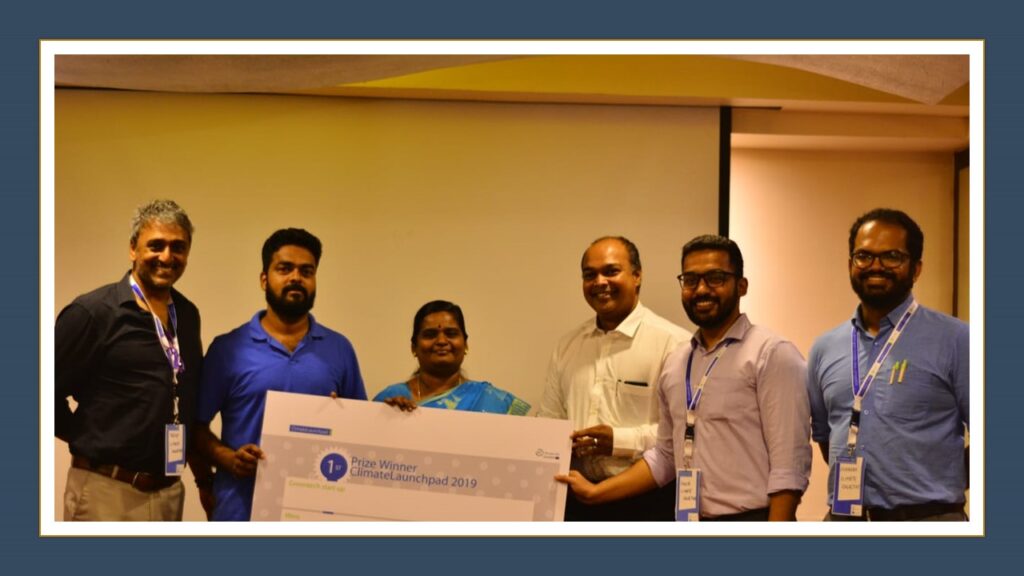
Imagine a robot that not only tends to your garden but also responsibly disposes of sullage, or a grid of ceramic tubes generating electricity to power your gadgets. These groundbreaking concepts were among many innovative ideas showcased at the “Green Business Ideas Pitch & Boot Camp – Puducherry Chapter, 2019”, held at Pondicherry University. This dynamic event was co-organized by the Association for Promoting Sustainability in Campuses and Communities (APSCC) and ClimateLaunchpad, the world’s largest green business ideas competition. Fostering Innovation and Sustainability The Green Business Ideas Pitch & Boot Camp aimed to create a platform for aspiring entrepreneurs to present their sustainable innovations while receiving expert guidance and mentorship. By focusing on ideas that address pressing environmental challenges, the event aligned with global efforts to foster sustainable development. Participants showcased projects across diverse domains, including: Renewable Energy: Innovative solutions for generating clean energy. Waste Management: Creative ways to repurpose and manage waste. Eco-Friendly Technologies: Practical tools and systems to reduce environmental impact. Event Highlights Interactive Workshops Participants underwent an intensive boot camp where they learned: How to refine their ideas into viable business models. Effective pitching techniques to communicate their concepts to investors and stakeholders. Pitch Presentations Each team presented their idea to a panel of sustainability experts, entrepreneurs, and investors, receiving constructive feedback to enhance their projects. Networking Opportunities The event provided a space for collaboration, enabling participants to connect with mentors, industry leaders, and like-minded innovators. Impact of the Event The Puducherry Chapter served as a launchpad for green entrepreneurs, empowering them to transform innovative ideas into impactful businesses. Notable outcomes included: Encouraging Grassroots Innovation: Many ideas stemmed from local challenges, providing region-specific solutions. Promoting Climate-Positive Businesses: The concepts presented were geared toward reducing carbon footprints and enhancing sustainability. Nurturing Entrepreneurial Talent: The event equipped participants with the skills to navigate the competitive landscape of green businesses. Looking Ahead Events like the Green Business Ideas Pitch & Boot Camp underscore the potential of innovation in tackling environmental issues. By supporting and nurturing green entrepreneurs, APSCC and ClimateLaunchpad are fostering a new generation of leaders committed to sustainability. To learn more about the event and the incredible ideas presented, check out the full article in The Hindu: Spotlight on Green Business Ideas.
Seminar on ‘Good Health and Well Being – SDG 3’
The Association for Promoting Sustainability in Campuses and Communities (APSCC), in collaboration with Prof. A. Chella Perumal (Pondicherry University, India), Prof. Andrew J. Russell (Durham University, UK), and a host of esteemed experts, successfully organized a Seminar on ‘Good Health and Well-Being.’ This impactful event revolved around Sustainable Development Goal 3 (SDG-3), which aims to ensure healthy lives and promote well-being for all at all ages. Focus on SDG-3: A Vision for Global Health SDG-3 underscores the importance of addressing key health priorities, including: •Reducing maternal and child mortality. •Combating communicable and non-communicable diseases. •Strengthening healthcare systems. •Promoting mental health and overall well-being. The seminar provided a platform for stakeholders across academia, healthcare, and policy-making to discuss innovative strategies and share insights on achieving these critical targets. Event Highlights Keynote Addresses by Renowned Experts The seminar featured compelling talks by thought leaders in global health and sustainability. •Prof. A. Chella Perumal provided insights into India’s public health challenges and the role of education in fostering healthy communities. •Prof. Andrew J. Russell shared perspectives on global health disparities and the importance of interdisciplinary approaches in addressing them. Interactive Panel Discussions Panels comprised experts from diverse fields, including healthcare, environmental science, and community development. Topics included: •The nexus between environment, health, and sustainability. •Challenges in achieving universal health coverage. •Innovations in mental health care and wellness. Outcomes and Impact Knowledge Sharing: The seminar facilitated knowledge exchange on global best practices for promoting health and well-being. Action-Oriented Solutions: Participants left equipped with actionable strategies to contribute toward achieving SDG-3 in their respective fields. Collaborative Opportunities: The event fostered partnerships among institutions and experts to drive sustainable health initiatives. The seminar on ‘Good Health and Well-Being’ served as a beacon for driving transformative action toward achieving Sustainable Development Goal 3. By bringing together experts, educators, and changemakers, APSCC and its partners reaffirmed their commitment to creating a healthier, more equitable world for all.
Cotton Bag Drive: A Sustainable Step Forward
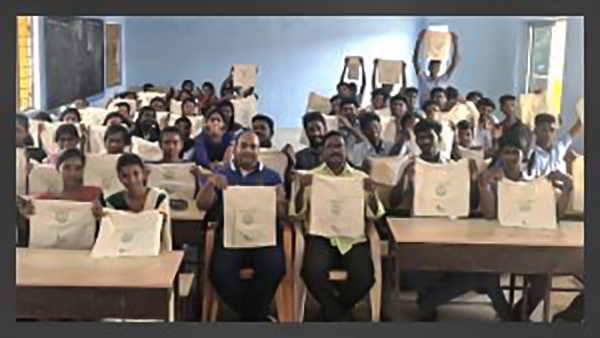
The Association for Promoting Sustainability in Campuses and Communities (APSCC) took an inspiring step towards environmental responsibility by promoting a Cotton Bag Drive during the 7-day National Service Scheme (NSS) camp at Kamban Government Higher Secondary School. Under the leadership of Dr. M. Nandhivarman, who presided over a special session on Environmental Awareness, the drive served as an impactful reminder of the small yet significant actions that can drive transformative change. Why Cotton Bags Matter Switching from plastic to cotton bags is more than a lifestyle choice—it’s a commitment to sustainability. Here’s why cotton bags stand out as an eco-friendly alternative: Environmental Benefits • Biodegradability: Unlike plastic bags that take centuries to decompose, cotton bags, made from natural fibers, break down easily in the environment. • Reduced Pollution: Cotton bags minimize ocean and terrestrial pollution, which is a significant threat posed by single-use plastics. • Lower Carbon Footprint: When used repeatedly, cotton bags have a smaller carbon footprint compared to their plastic counterparts. • Waste Reduction: Every cotton bag used prevents countless plastic bags from entering landfills or natural habitats. Durability and Reusability • Strong and Long-Lasting: Cotton bags can carry heavier loads and endure more wear and tear compared to plastic bags. • Multipurpose: These bags are not just for groceries—they’re great for carrying books, clothes, or even as stylish storage solutions. Health Benefits • Chemical-Free: Made from natural fibers, cotton bags avoid harmful chemicals like BPA found in plastics. • Better for Produce: Cotton bags allow fruits and vegetables to breathe, reducing spoilage and the risk of mold. Economic and Practical Appeal • Cost-Effective: Though initially more expensive, their durability saves money over time. • Customizable and Stylish: Cotton bags can be tailored with designs, slogans, or logos, adding a touch of personal or promotional flair. Key Highlights from the NSS Camp The Cotton Bag Drive at the NSS camp exemplified APSCC’s commitment to raising awareness and promoting action: • Hands-On Engagement: Participants actively distributed cotton bags while discussing the harmful impacts of plastic on ecosystems. • Expert Guidance: Dr. Nandhivarman’s session equipped participants with practical solutions for reducing waste at both individual and community levels. • Community Impact: The drive reached local residents, fostering a collective responsibility to adopt sustainable practices. A Step Towards Sustainability This initiative aligns with APSCC’s broader mission to promote sustainable living. By introducing reusable alternatives like cotton bags, the organization reinforces key principles of environmental stewardship: • Supporting renewable resources and ethical labour practices. • Encouraging grassroots movements to mitigate climate change. • Advocating for community-wide participation in reducing plastic pollution. Join the Movement The success of the Cotton Bag Drive is a testament to the power of collective action. As individuals, small changes in our daily lives—such as choosing reusable cotton bags—can lead to significant environmental benefits. Together, let’s contribute to a cleaner, greener future. Switch to cotton bags today and be part of the solution!
Mitigate Indoor Air Pollution: Green Protocol Compliance at Chief Secretariat, Puducherry

Indoor air pollution is a silent yet pervasive threat that significantly affects the health, well-being, and productivity of individuals in workplaces. Hazardous substances like volatile organic compounds (VOCs), particulate matter, and carbon monoxide are often present in enclosed spaces, leading to adverse health effects even at low concentrations. Recognizing the urgency of this issue, the Association for Promoting Sustainability in Campuses and Communities (APSCC), in collaboration with the Chief Secretariat, Puducherry, launched a green initiative under the leadership of Shri P. Jawahar, IAS (Secretary to Government – Smart City) and Shri P. Parthiban, IAS (Secretary to Government – Climate Change). This initiative aligns with the Comprehensive Green Protocol and aims to mitigate indoor air pollution by leveraging the natural air-purifying properties of plants. Understanding the Problem: Sources of Indoor Air Pollution As identified by the United States Environmental Protection Agency (USEPA), common sources of indoor air pollution include: 1.Asbestos 2.Carbon Monoxide (CO) 3.Formaldehyde from pressed wood products 4.Nitrogen Dioxide (NO2) 5.Pesticides and VOCs 6.Indoor particulate matter 7.Secondhand smoke 8.Appliances like stoves, heaters, and chimneys To combat these pollutants, this program focuses on air-purifying plants that address harmful substances such as trichloroethylene, benzene, xylene, and ammonia. Air Purifying Plants: Nature’s Solution to Pollution NASA’s Clean Air Study highlights several plants with proven air-purifying properties. These plants not only filter toxins but also improve air quality, providing a healthier and more productive workspace. Recommended Air-Purifying Plants 1. Spider Plant (Chlorophytum comosum) 2. Snake Plant (Sansevieria trifasciata) 3. Peace Lily (Spathiphyllum) 4. English Ivy (Hedera helix) 5. Aloe Vera (Aloe barbadensis miller) 6. Bamboo Palm (Chamaedorea seifrizii) 7. Gerbera Daisy (Gerbera jamesonii) 8. Areca Palm (Dypsis lutescens) 9. Rubber Plant (Ficus elastica) 10. Golden Pothos (Epipremnum aureum) 11. Philodendron 12. Boston Fern (Nephrolepis exaltata) Implementation: Green Protocol Compliance The program at the Chief Secretariat, Puducherry, aims to integrate these air-purifying plants into office spaces, fostering: 1.Cleaner Indoor Air: Reducing harmful pollutants. 2.Improved Productivity: Healthier employees lead to better work performance. 3.Green Aesthetics: Enhancing workspace ambiance and reducing stress levels. 4.Sustainability Awareness: Promoting eco-friendly practices among employees and visitors. The introduction of air-purifying plants at the Chief Secretariat represents a significant step toward achieving Green Protocol compliance in Puducherry. Beyond improving indoor air quality, this initiative serves as a model for other government and private institutions to adopt similar sustainable practices. Additionally, promoting these plants through government and private nurseries can increase vegetative cover, provide educational opportunities, and create avenues for revenue generation through green entrepreneurship.