Flagship Campaign / UN Decade on Ecosystem Restoration

Green Campuses for Green Cities (GCGC).

A national and global movement envisaging green campuses across 1,000 cities by 2030 — transforming universities and higher educational institutions into engines of urban resilience, biodiversity restoration, and climate action.

Global Urban Target 1,000 Cities by 2030
Youth Restoration 10,000 Green Schoolyards
UN Decade Role Global Challenge Lead Focal Point
Implementation Framework 4-Pronged Participatory Model
National Level Green Campus for Green Cities Campaign Launch Banner
NATIONAL LAUNCH BANNER · PUDUCHERRY, INDIA CHIEF GUESTS & CHANCELLORS · UN DECADE CITIES & YOUTH CHALLENGES
UN Decade Lead Focal Point

One Planet. Two Global UN Decade Challenges.

Addressing the triple planetary crisis of climate change, biodiversity loss, and pollution by connecting academic leadership with urban and youth ecosystem restoration.

UN Decade Cities Challenge Badge
UN Restoration Challenge #1

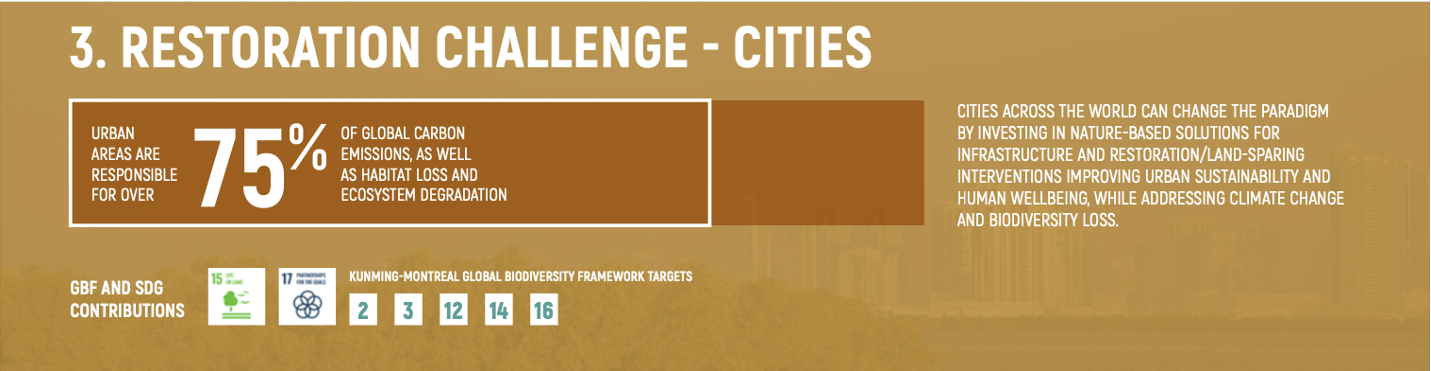
The Cities Challenge

Aiming to restore urban spaces and coastal ecosystems in more than 1,000 cities across the globe by 2030. Encompassing universities, colleges, government organizations, botanical gardens, wetlands, beaches, and municipal zones to foster climate resilience.

Join the Cities Challenge
UN Decade Youth Challenge Badge
UN Restoration Challenge #2

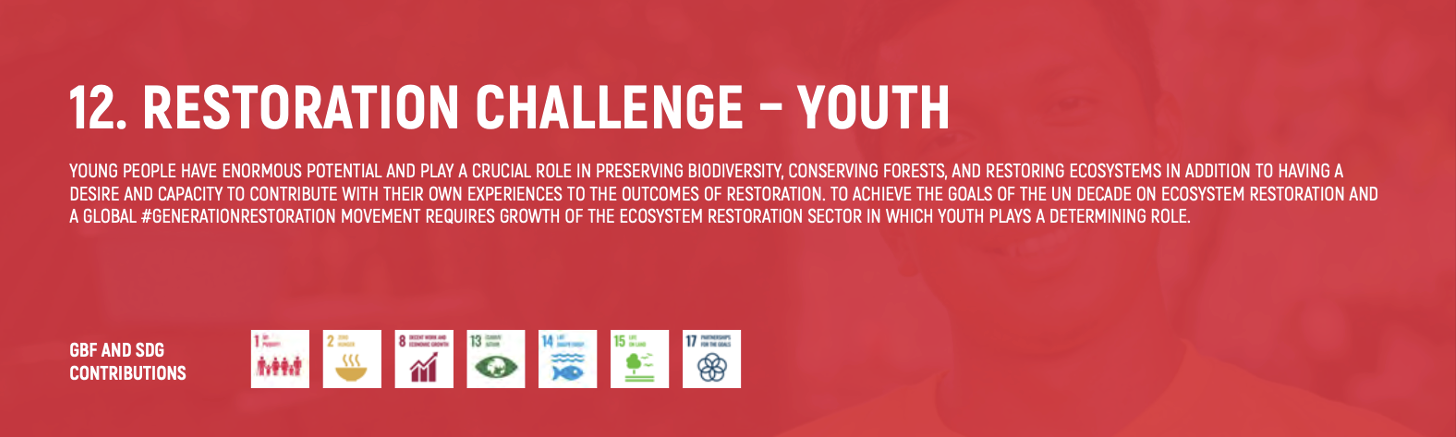
The Youth Challenge

Targeting the ecological restoration of 10,000 schoolyards globally and mobilizing students across universities, colleges, and schools to achieve 100 million social posts under the global hashtag #GenerationRestoration.

Pledge Your Schoolyard
Implementation Methodology

The Four-Pronged Participatory Approach

A capacity-building program tailored for education administrators, university heads, and community leaders to execute sustainable campus transformation.

GCGC Four Themes Banner Graphic
Pillar 01

Campus Green Protocols & Net-Zero

Formulating standard operating procedures for energy efficiency, water stewardship, hazardous waste management, and single-use plastic elimination.

Pillar 02

Lab-to-Land Environmental Education

Moving evidence-based environmental research out of laboratories directly into schools, local municipalities, and village communities.

Pillar 03

Topsoil Upgradation & Soil Doctors

Deploying organic food production, vermicomposting, and the FAO Global Soil Doctors Program to protect topsoil health and organic carbon.

Pillar 04

Gamified Sustainability Challenge

Engaging students through a year-round gamified challenge, real-time data collection, and community outreach for continuous participation.

National & International Leadership

Distinguished Launch Dignitaries & Speakers

Bringing together international science-policy leaders, UN coordinators, government secretaries, and university chancellors.

Chief Guests & National Dignitaries
Shri. K. Kailashnathan Hon’ble Lieutenant Governor, UT of Puducherry
Dr. G. Viswanathan Hon’ble Chancellor, VIT University
Shri. M. Dhanasekaran Hon’ble Chancellor, Takshashila University
Shri. P. Jawahar IAS Secretary to Govt. (Science, Tech & Environment)
Shri. P. Arulrajan IAS Chief Conservator of Forests, Puducherry
Shri. R. Kesavan IAS Secretary to Govt. (Local Administration)

Dr. David Obura

Chair, UN-IPBES

Director, CORDIO East Africa · Earth Commission

Natalia Alekseeva

UN Decade Coordinator

United Nations Environment Programme (UNEP)

Prof. Carolyn Lundquist

IPBES MEP Member

Co-Chair, IPBES Scenarios & Models Taskforce

Prof. Walter Leal Filho

Chair, Climate Management

Hamburg Univ. & Manchester Metropolitan Univ.

Prof. Wendy M. Purcell

Professor & Research Scholar

Harvard University & Rutgers School of Public Health

Mr. Ritin Malhotra

Regional Director (Asia)

Times Higher Education (THE Impact Rankings)

Jean-Christophe Carteron

President, Sulitest

Co-Chair, UN Higher Education Initiative (HESI)

Wynn Calder

Co-Director, ULSF

Talloires Declaration Secretariat, USA

Measurable Impact

Transformative Outcomes for Institutions & Cities

A scalable model enhancing environmental leadership, real-time data collection, policy compliance, and international recognition.

Scalable Urban Model

Provides a repeatable framework for universities and municipalities across states and countries to collaborate on urban greening.

Real-Time Data Collection

Enables institutions to track energy, water, waste, and carbon metrics for informed decision-making and NIRF / NAAC / QS ranking compliance.

UN Platform Integration

Connects participating campuses with the global UN Decade platform to exchange best practices with international institutions.

National Press Coverage

Campaign envisaging green campuses across 1,000 cities by 2030

Featured in The Hindu — highlighting the joint launch by Lieutenant Governor K. Kailashnathan and university chancellors in Puducherry.

Read Full Press Release ↗
Take Action Today

Pledge Your Institution for GCGC 2030

Is your university, college, school, or municipality ready to lead the green transition? Join over 1,000 cities in building resilient, nature-positive campuses.

Pledge Your Campus →