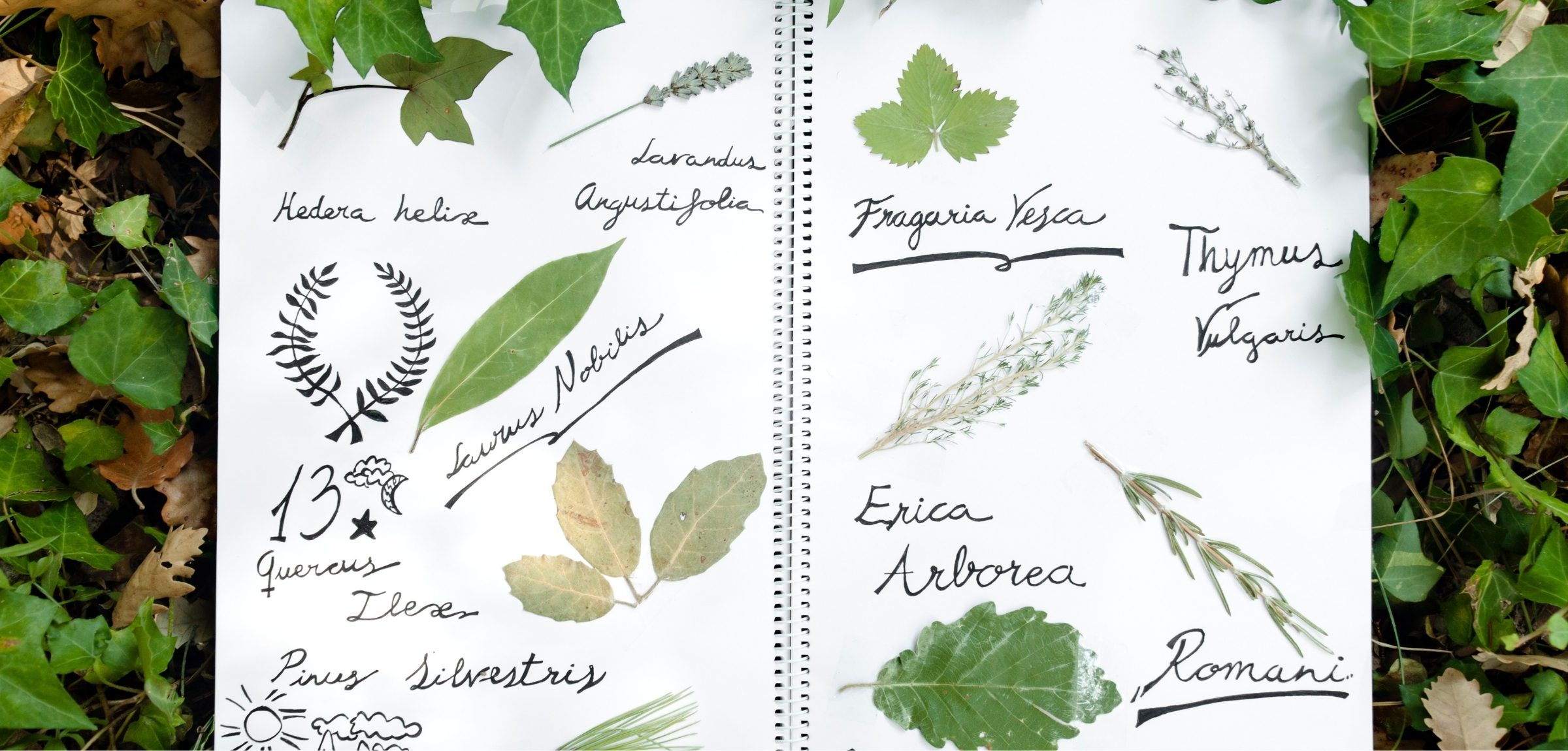
APSCC organised a student study visit to the Herbarium of the French Institute of Pondicherry (HIFP) — a botanical treasure that houses more than 24,000 preserved specimens drawn from 4,659 species, established in 1956 by the French botanist Pierre Legris.
Tucked inside the French Institute of Pondicherry, the Herbarium (HIFP) is a living record of South Indian and Western Ghats plant life. Founded in 1956 by Pierre Legris of the French Forestry Commission, it grew into one of the most significant botanical reference collections in the region — a place where a single pressed leaf can carry a century of scientific memory.
The collection spans 268 plant families and 4,659 species, with a particular richness in the flora of the Western Ghats, one of the world’s recognised biodiversity hotspots. Generations of researchers — among them Meher-Homji, G. Thanikaimani, Blasco, Shankaranarayan and Jean-Pierre Pascal — built the herbarium into an authoritative resource for vegetation mapping, plant taxonomy and ecological study across peninsular India.
Meeting the keepers of the collection
During the visit, students were guided by herbarium experts S. Aravajy and N. Barathan, who walked them through the craft and science behind a working herbarium. The conversation moved from the field to the archive: how plants are collected, how a fresh specimen is pressed, dried and preserved so it can survive for decades, and how each sheet is catalogued so it can be found again years later.
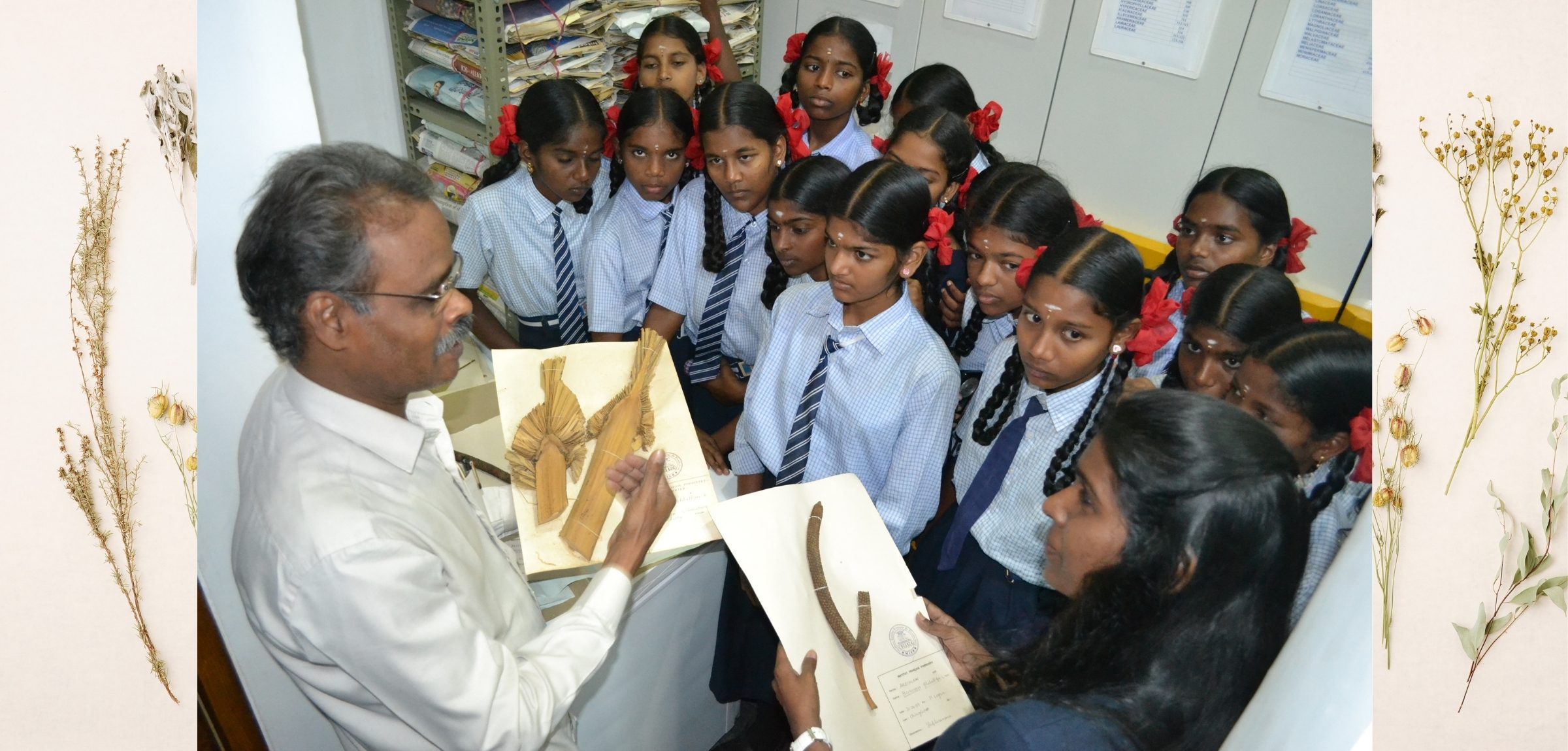
From wooden cabinets to steel
The students also learned how the herbarium itself has evolved. The specimens, once stored in the original wooden cases, have been progressively migrated into modern steel cases that offer far better protection against humidity, pests and the slow damage of time — a small but telling example of how conservation practice keeps pace with a growing, ageing collection.
Equally important is the digital chapter. The herbarium’s records were first digitised in 1998, and in 2010 the database was migrated to the Pl@ntNote / Pl@ntNet platform, making a physical archive searchable and shareable well beyond the walls of the institute. For the students, it was a vivid demonstration that even a 60-year-old collection of dried plants is very much part of the digital, data-driven future of biodiversity science.
A herbarium is a library written in leaves — every pressed specimen is a page of the planet’s botanical memory, waiting to be read again.
Why it matters for young stewards
For APSCC, visits like this are about more than a day out. They connect students to the practical work of documenting and protecting biodiversity — the quiet, careful, long-term science that underpins conservation. Seeing a specimen collected before they were born, still legible and useful, brings home why records, preservation and knowledge-sharing matter for the ecosystems around them.
Aligned with the Global Goals
The study visit supports the United Nations Sustainable Development Goals — nurturing quality education and hands-on scientific learning, and deepening students’ understanding of the terrestrial biodiversity a herbarium is built to protect.
Study visit organised by APSCC to the Herbarium of the French Institute of Pondicherry (HIFP). Facts on the collection, its history and preservation practices are drawn from the institute’s own records and from experts S. Aravajy and N. Barathan. Learn more via APSCC’s Our Work.