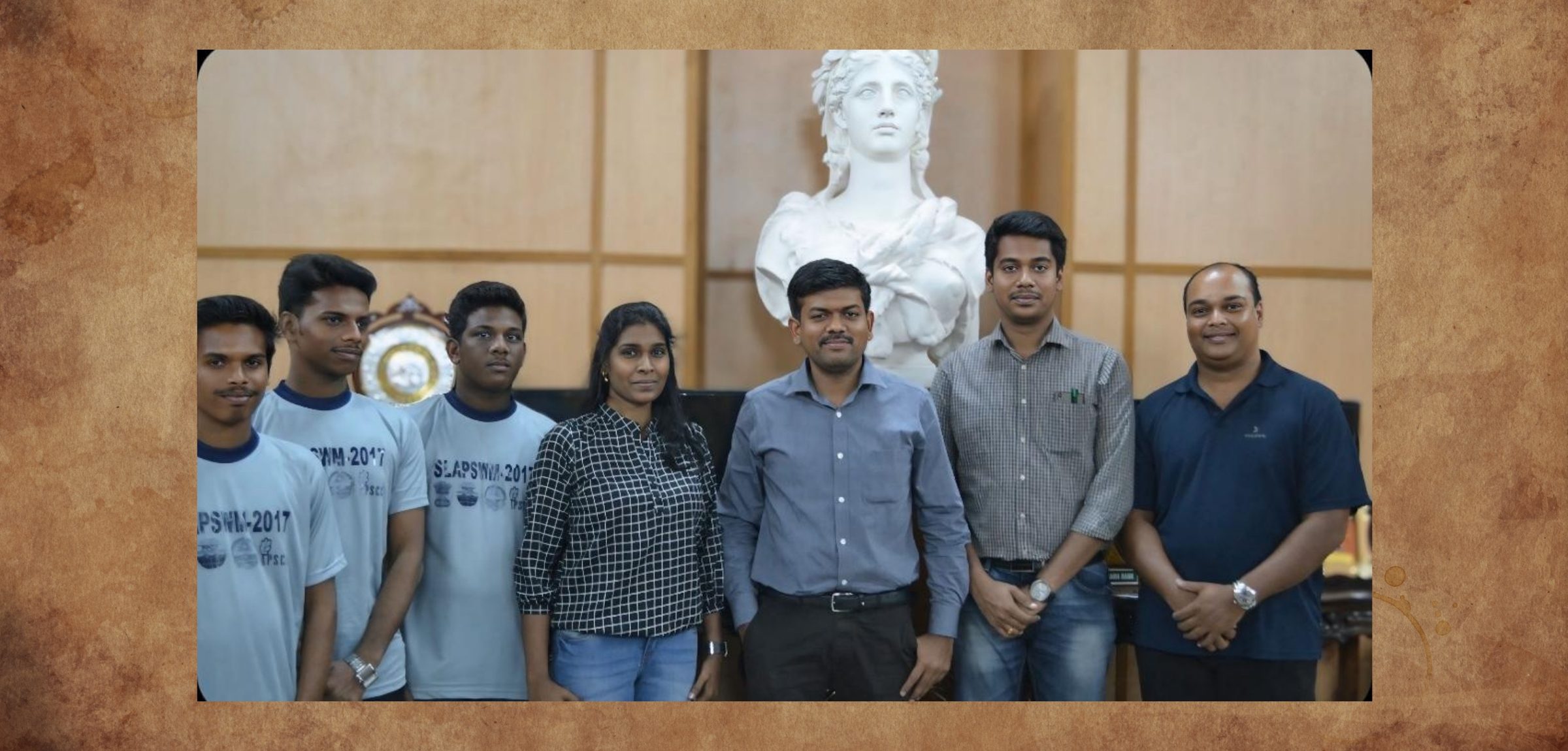
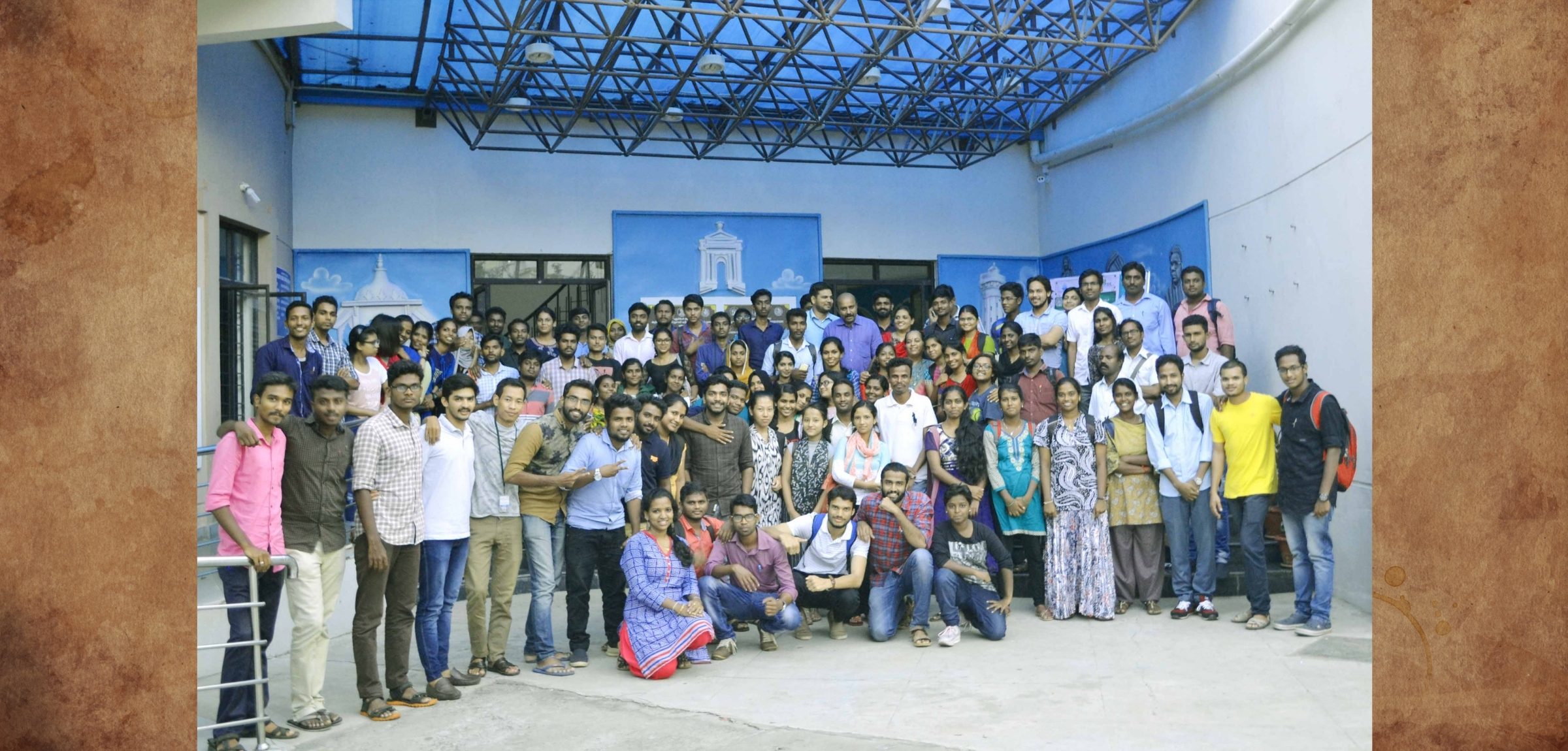
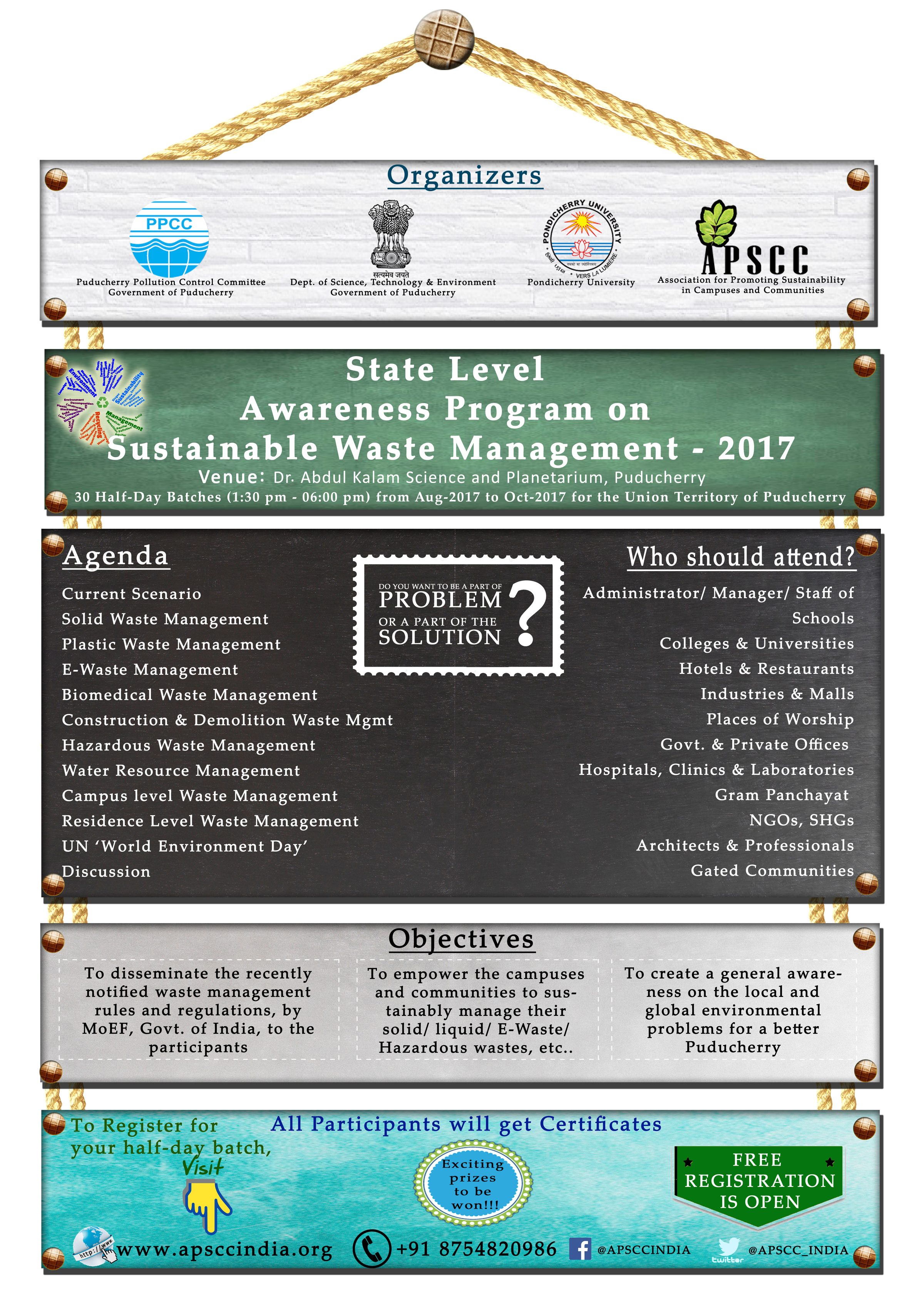
The State-Level Awareness Program on Sustainable Waste Management (SLAPSWM 2017–18) brought together 10,000 participants across 90+ sessions spanning Puducherry, Karaikal, Mahe and Yanam — launching the Comprehensive Green Protocol.
Organised jointly by the Puducherry Pollution Control Committee (PPCC), the Department of Science, Technology & Environment (DST&E), Pondicherry University (PU) and the Association for Promoting Sustainability in Campuses & Communities (APSCC), SLAPSWM 2017–18 set out to transform how the Union Territory thinks about waste — from disposal to design.
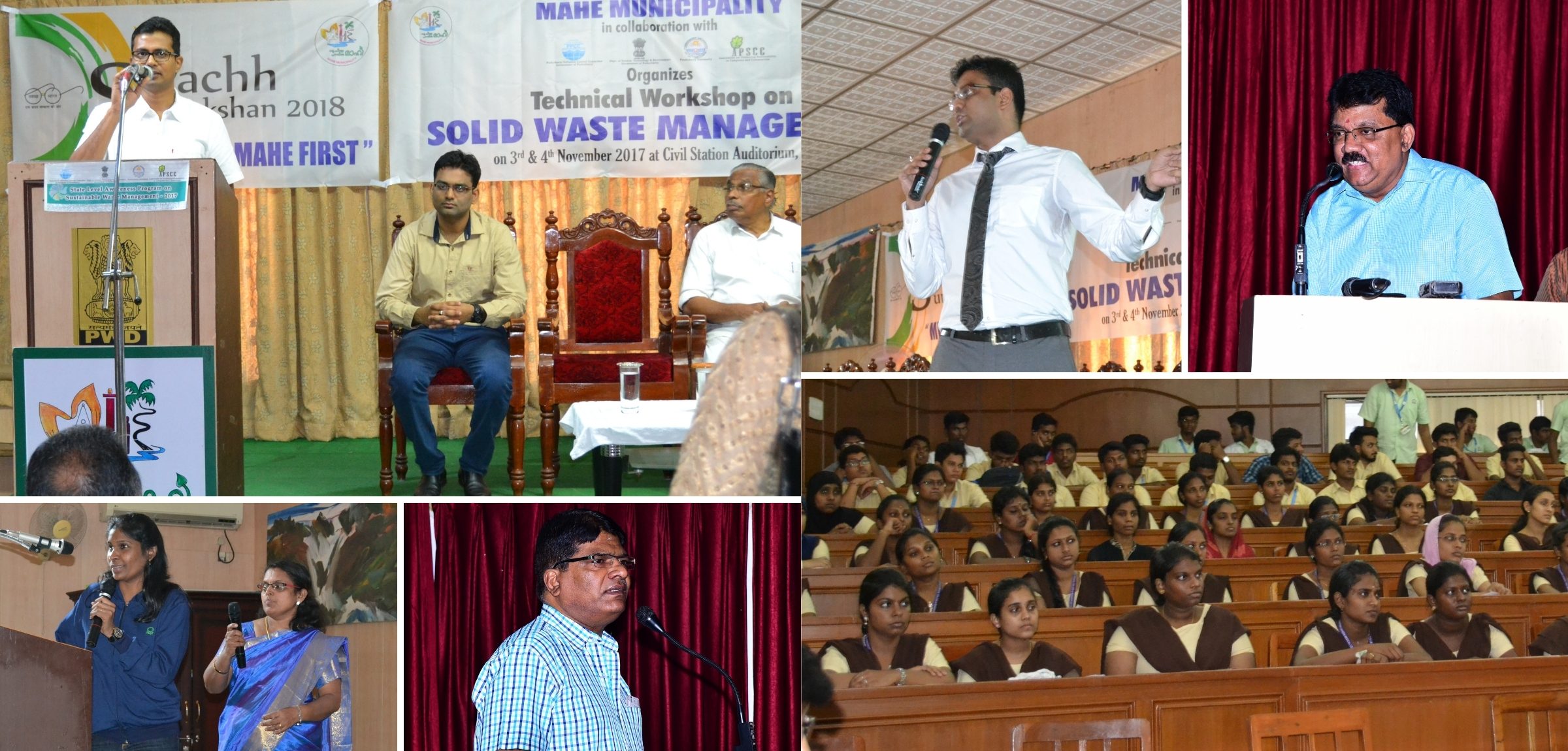
The program spanned all four regions of Puducherry — Puducherry, Karaikal, Mahe and Yanam — reaching schools, colleges and community groups through more than 90 awareness sessions led by an equally large pool of resource persons. Its most significant outcome was the launch of the Comprehensive Green Protocol, a framework to embed sustainable waste practices into institutional and community life.
A high-profile inauguration
The inaugural was held at the Dr. Abdul Kalam Science Centre, presided over by the Chief Minister, Shri V. Narayanasamy, alongside Secretary Shri R. Mihir Vardhan, IAS. The event signalled strong government backing for a citizen-and-campus-led approach to waste management.
Campuses lead by example
Institutional partners moved from awareness to action. JIPMER and the Pondicherry Institute of Medical Sciences (PIMS) implemented dedicated campus waste management projects — installing biogas plants, running plastic reduction campaigns, and demonstrating that large institutions can meaningfully cut their environmental footprint.
The sessions focused on the fundamentals that make waste systems work: waste segregation at source, recycling streams, and the safe disposal of hazardous waste. Dr. Ashok Shankar Badhe of JIPMER was commended for his leadership in driving campus-level implementation.
From awareness to infrastructure — SLAPSWM proved that a Green Protocol works best when campuses, government and communities move together.
Aligned with the Global Goals
SLAPSWM 2017–18 advanced several UN Sustainable Development Goals — from health and wellbeing to sustainable cities, responsible consumption, and climate action.