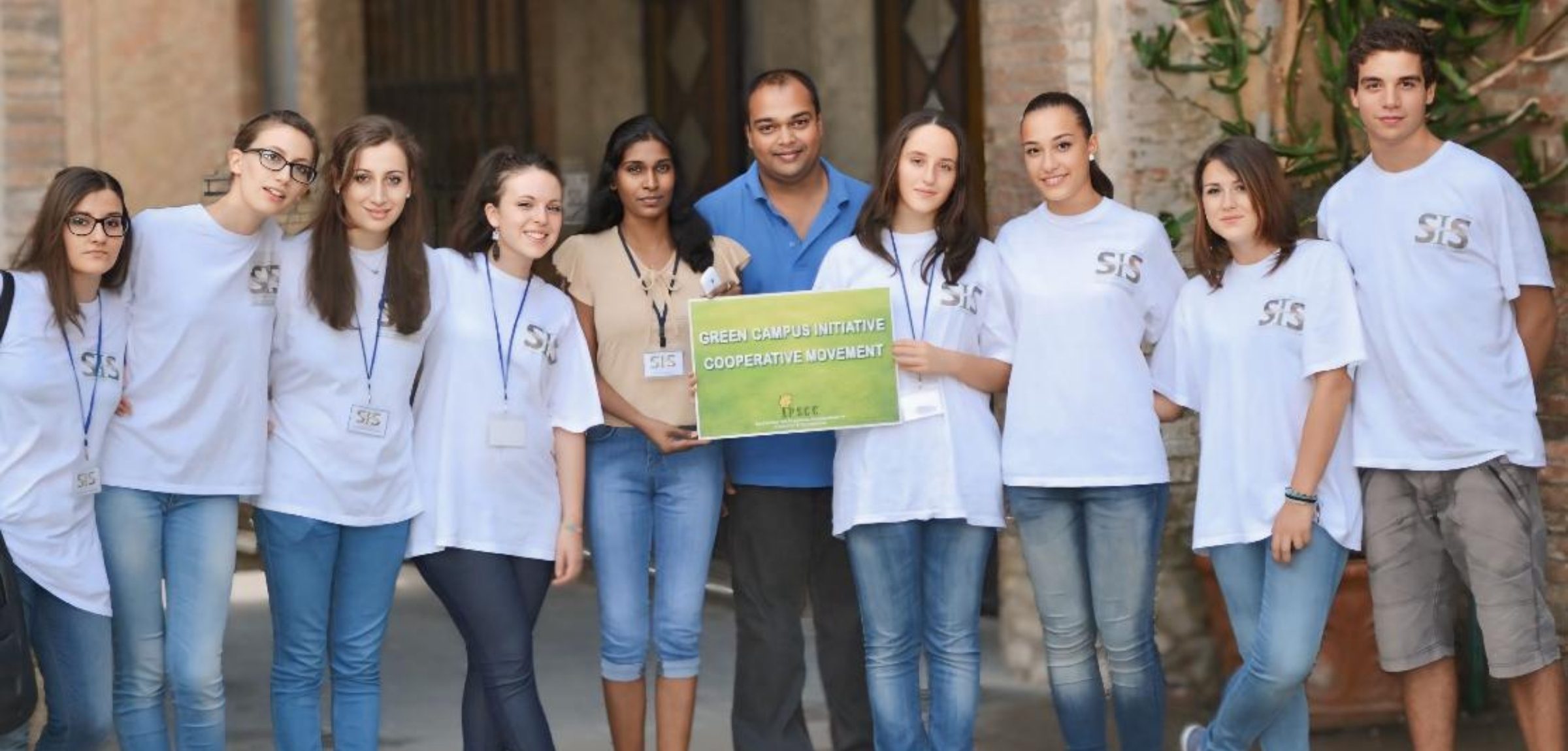
In the hilltop town of Todi, in the Umbrian heart of Italy, APSCC joined an international gathering of young professionals to tackle one of the defining challenges of our time: how to reconcile finite water resources with a rising global demand for food.
From 24 August to 2 September 2012, APSCC took part in the International Summer School on Sustainable Management and Promotion of Territory (SMPT), hosted at the Agricultural Citadel of the State Technical Agricultural College “A. Ciuffelli” in Todi. Now in its second edition, the programme drew participants from across agriculture, environmental management, ICT, and applied economics, alongside broad international representation — a deliberately interdisciplinary mix designed to look at territory management from every angle.
The curriculum was anchored around the intertwined themes of sustainable water management and food security. Sessions examined the relationship between water resources and global food demand, strategies for improving water efficiency, and approaches to mitigating the conflicts that emerge when water becomes scarce. For a region-agnostic organisation like APSCC, the framing resonated: the same pressures play out in vulnerable communities the world over.
APSCC's Contribution
Representing APSCC, Dr. Edwin presented on sustainable water practices and the frameworks needed to meet food demand in vulnerable regions. Rather than dwelling on the scale of the problem, his emphasis was on actionable frameworks — practical, transferable approaches that communities and institutions can adopt to close the water–food gap.
Three threads ran through the contribution. First, the water–food gap itself: the widening distance between how much water is available and how much is needed to feed growing populations. Second, the central role of women's empowerment in water management, recognising that in many vulnerable regions women are the primary stewards of household and community water. Third, the imperative of reducing food waste, since every unit of wasted food also wastes the water embedded in producing it.
Water and food are not two problems but one — and the frameworks that solve them must be practical enough for a vulnerable community to put to work tomorrow, not just debate today.
Advancing the Global Goals
APSCC's participation in Todi speaks directly to the United Nations Sustainable Development Goals — connecting the local work of water and food management to a shared global agenda.

APSCC engages internationally to share practical sustainability frameworks and learn from partners worldwide. Explore more of our work across campuses and communities on the Our Work page.