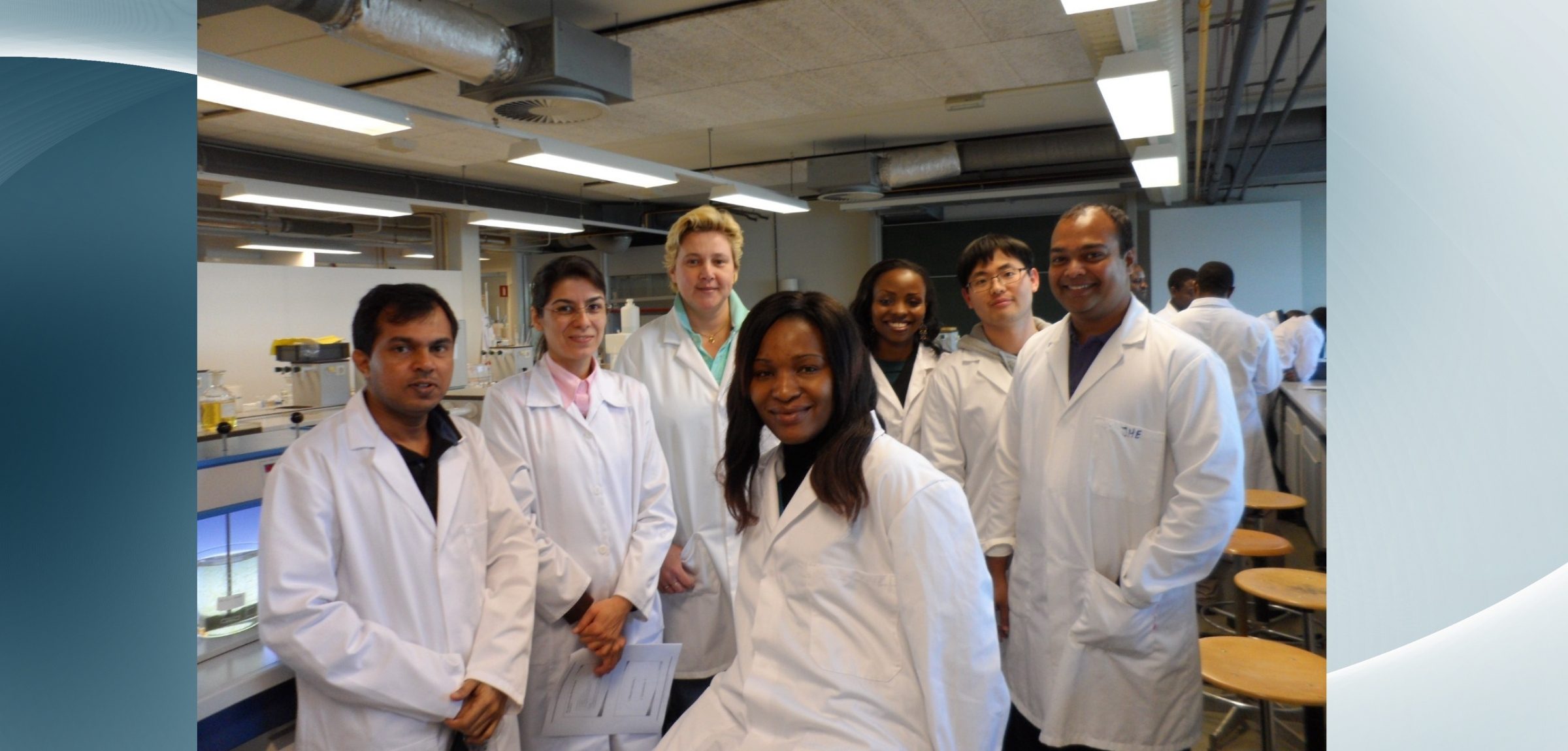
Following advanced training at UNESCO-IHE in Delft — the world's largest international graduate water education facility — APSCC researchers set out to answer a deceptively simple question: could locally available native plants treat wastewater just as effectively as the species conventionally used in constructed wetlands?
Constructed wetlands are engineered ecosystems that mimic the natural filtering power of marshes and reedbeds. Wastewater flows slowly through beds of gravel and rooted plants, where microbial communities on the roots break down organic matter, nutrients, and pollutants. It is a low-energy, low-cost approach to water treatment — but its performance has long been tied to a handful of "standard" plant species, most notably Typha (the common cattail).
The research question
Building on the expertise gained at UNESCO-IHE, APSCC's team designed a study using native plant species drawn from the local landscape rather than imported or commercially cultivated stock. The central comparison pitted a native Arundo species against the widely used Typha to test treatment efficiency across key water-quality indicators.
The key finding
The results were clear: the native Arundo species performed on par with Typha in treating wastewater within the constructed wetland system. The findings were published in peer-reviewed journals, giving them the rigour and credibility needed to inform practical water-management decisions.
Water is not a commodity — it is a commons, and native ecosystems hold the keys to sustaining it.
Why it matters
The significance runs deeper than a single species comparison. Because the Arundo species is native, it is more adaptable to local conditions, easier to cultivate, and reduces reliance on external or imported resources. APSCC's design deliberately used locally available native species — turning a water-treatment technology into something communities can build and maintain themselves.
This community-based, eco-friendly approach connects directly to the global sustainability agenda: clean and affordable water treatment (SDG 6), the protection and use of native terrestrial ecosystems (SDG 15), and partnerships that transfer knowledge from international training to local application (SDG 17).
Research conducted by APSCC following training at UNESCO-IHE Institute for Water Education, Delft, Netherlands. Findings published in peer-reviewed journals. Explore more of our work on Our Work and Research & Publications.