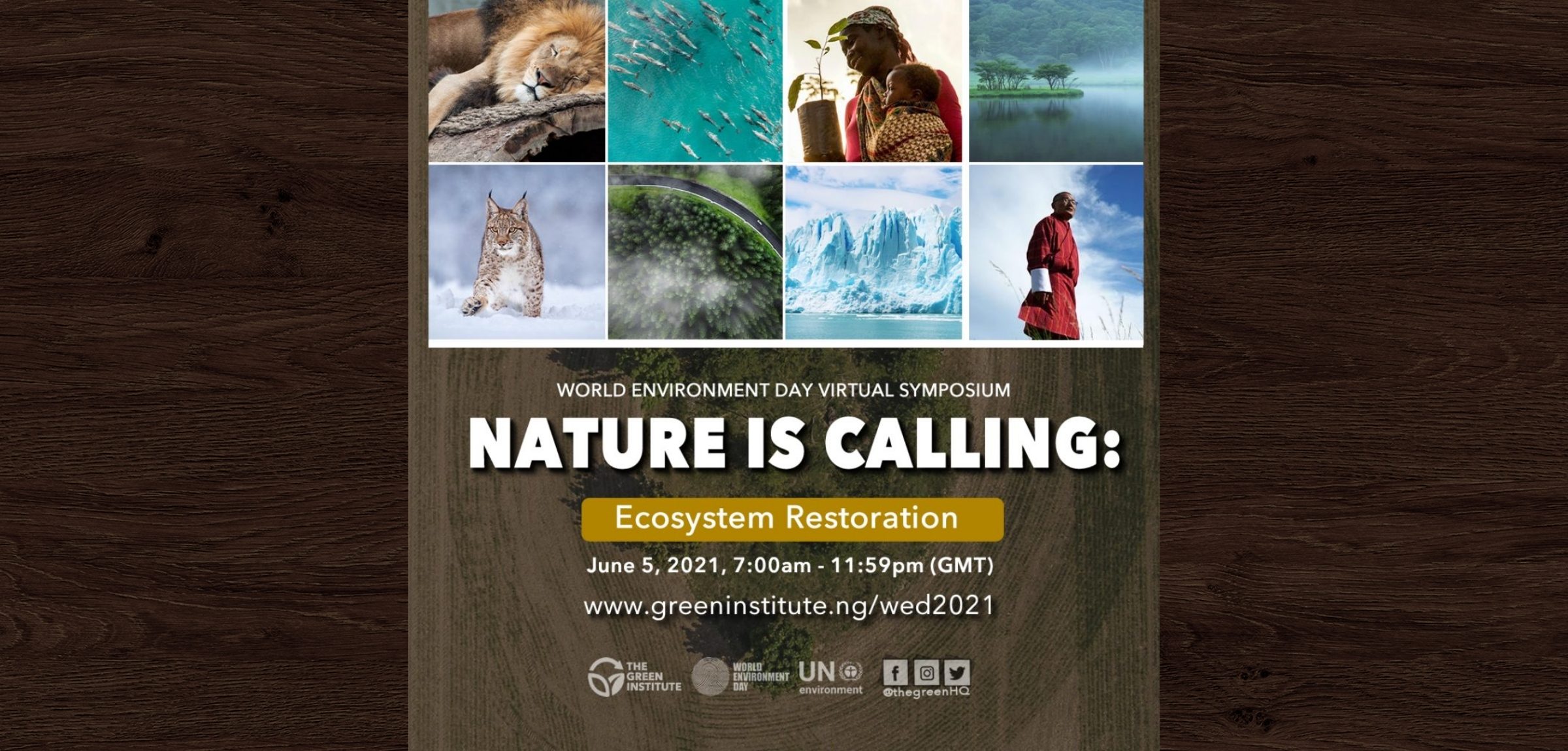
On World Environment Day 2021, APSCC joined forces with The Green Institute for a virtual symposium themed “Nature is Calling” — a global gathering of more than 25 renowned sustainability leaders convened to answer one urgent question: how do we restore what we have lost?
Held on 5 June 2021, the symposium arrived at a pivotal moment. It aligned with the launch of the UN Decade on Ecosystem Restoration (2021–2030) and echoed the World Environment Day 2021 global theme, “Ecosystem Restoration.” Through a series of focused breakout sessions, participants moved beyond diagnosis to design — mapping practical pathways to heal degraded landscapes, revive waterways and rebuild biodiversity.
Why ecosystem restoration matters
Ecosystems — forests, wetlands, grasslands, oceans and the soil beneath our feet — are the living infrastructure of a stable planet. They regulate climate, purify water, sustain food systems and shelter the diversity of life. Yet degradation has accelerated to a point where restoration is no longer optional: it is the precondition for meeting climate targets, safeguarding food security and protecting the communities most exposed to environmental risk.
Restoration is also one of the highest-return investments available to humanity. Bringing degraded land, forests and freshwater systems back to health strengthens carbon sinks, rebuilds habitats and restores the natural services that economies quietly depend upon. The symposium framed this not as a cost, but as the most consequential investment we can make in a shared future.
The UN Decade on Ecosystem Restoration (2021–2030)
2021 marked the inaugural year of the UN Decade on Ecosystem Restoration, a global rallying call to prevent, halt and reverse the degradation of ecosystems on every continent and in every ocean. Spanning 2021 to 2030, the Decade is designed to scale restoration from isolated projects into a worldwide movement — uniting governments, institutions, communities and youth around a single, measurable ambition.
By convening on World Environment Day 2021 under the “Nature is Calling” banner, APSCC and The Green Institute positioned the symposium as an early contribution to that Decade — translating a global commitment into concrete dialogue, shared strategy and cross-border collaboration.
Connecting to APSCC’s ongoing work
The themes of the symposium sit at the heart of APSCC’s wider programmes. The International Conference on Climate Adaptation and Resilience Planning (ICCARP) advances the science and policy of resilience; the Green Campus initiative turns educational institutions into living laboratories of sustainability; and the Biodiversity Management Committee (BMC) model embeds conservation into local governance and community action.
Ecosystem restoration threads through all of them — making the World Environment Day 2021 symposium a natural extension of APSCC’s mission to link knowledge, campuses and communities in service of a restored planet.
The role of virtual summits
By gathering 25+ leaders across borders on a single virtual platform, the symposium demonstrated how digital convening can accelerate global sustainability networking. Virtual summits lower the barriers to participation, widen the circle of voices and allow ideas to move at the speed the climate crisis demands — without the carbon footprint of large physical gatherings. For a movement built on collaboration, that reach is itself a form of restoration.
Aligned with the SDGs
The symposium advanced the following Sustainable Development Goals — strengthening climate action, protecting terrestrial ecosystems and building the partnerships that make global restoration possible:
The most effective investment in our future is the restoration of what we have lost — soil, forest, water, and the diversity of life.
Event: World Environment Day 2021 Virtual Symposium — “Nature is Calling” · 5 June 2021 · In partnership with The Green Institute (greeninstitute.ng).